
View Video Transcript

BACK TO ARTICLE

The Wine Regions of Bordeaux

  • Bordeaux has long been home to iconic names like Medoc, Pomerol, Saint-Émilion, Pauillac, Margaux, Sauternes, and Cognac - - all of them located within a short distance of each other.

  • Thanks to unique natural elements including rivers, elevation changes, and a wide range of soils, wine making has thrived here, resulting In remarkable red wines, white wines, sweet wines, and other aperitifs and digestifs.

  • Bordeaux is usually thought of in terms of left bank and right bank, referring to their location along the Gironde River.

  • The left bank is home to the Medoc region, which at one time was swampy marshland.

  • This is red wine country where tasty Cabernet Sauvignon and Merlot grapes enhance wines from Pauillac, Saint-Julien, and Margaux.

  • The vineyards are influenced by the warm waters of the Gironde estuary, southeasterly exposure, and soil that is a mix of soft clay and gravel.

  • It's a rare combination that has delivered Bordeaux's most desired wines Still On the left bank, but to the south is the Graves region.

  • Its red wines were sought after, long before Medoc existed, and it said that US President Thomas Jefferson had a special fondness for wine from one of the Chateaus here.

  • The Graves region is also home to wonderful white wines and the much loved so and Sauterenes and Barsac and wines.

  • These intensely sweet white wines are the end result of a phenomenon known as noble rot.

  • It impacts the grapes frequently here, dehydrating them inside the skin, which increases the concentration of sugars.

  • The three main grapes of this area are Sémillon, Sauvignon Blanc and Moscatel Between the Garonne and Dordogne rivers is Entre-Deux-Mer, which means between two seas.

  • This productive area is the source for the majority of Bordeaux's mainstream red wines.

  • The right bank has its own treasures, like the Libournais region, also bordering the Dordogne River.

  • It was first cultivated by the Romans and is home to the highly regarded Pomerol wines.

  • The grapes here are a mix of Merlot and Cabernet Franc, and the soil is influenced by varying degrees of gravel and sand.

  • Just next door is Saint-Émilion, named for the quaint village, the vineyards surround.

  • The other notable region includes Bourg & Blaye situated where the Garrone and Dordogne rivers meet.

  • It's one of the oldest wine producing areas of Bordeaux.

  • Merlot is the principle grape here, followed by Cabernet Sauvignon, Cabernet Franc, and Malbec.

  • Sauvignon Blanc grapes are also grown here for use in delightful sparkling wines.

  • While another white grape, Ugni Blanc is transformed into cognac.

  • Bordeaux is a diverse, beautiful region that I find fascinating, a mix of intriguing historical treasures and insights into the art of wine and Joie de vivre.

  • Whether you are a wine connoisseur or delving into the topic for the first time, Bordeaux is a destination well worth exploring.

Bordeaux, France’s celebrated vineyard-laden province, is home to some of the world’s most prized wines. Learn about its different regions and appellations with Karine.

Experience the vineyards of Bordeaux

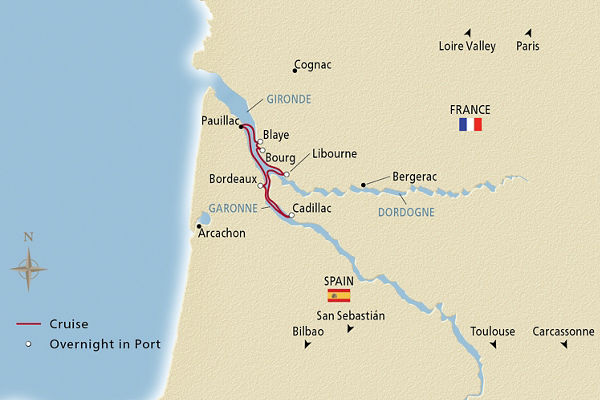
For centuries, Bordeaux has been home to iconic wine regions such as Médoc, Saint-Émilion and Margaux. The area’s winemaking success stems from a unique natural landscape defined by rivers, elevation changes and diverse soils. A journey with Viking along the Garonne and Gironde rivers offers an immersive look into the heritage and joie de vivre that define Southwestern France.

Group enjoying wine outside ivy-covered house

The geography of flavor

The Gironde River splits the Bordeaux region into two distinct areas: the Left Bank and the Right Bank. This geographical divide influences soil types and dictates grape varieties and wine styles. Understanding these differences can enhance your appreciation of every glass poured.

The Left Bank: Celebrated sweet wines and world-class reds

The Left Bank sits to the west of the Garonne and Gironde rivers. It includes the Médoc region, a territory that once consisted of swampy marshland. Today, Médoc is red wine country. Winemakers here primarily use cabernet sauvignon and merlot grapes to produce wines in Pauillac, Saint-Julien and Margaux. The warm waters of the Gironde Estuary and a rare mix of soft clay and gravel soil create the ideal conditions for these desired vintages.

South of Médoc lies the Graves region. This area produced sought-after red wines long before Médoc rose to prominence. Legend has it that U.S. President Thomas Jefferson held a special fondness for one of the châteaux here. Graves also produces celebrated white wines and sweet wines like Sauternes and Barsac. A natural phenomenon called noble rot dehydrates the region’s grapes and concentrates the sugars, a process that creates an intensely sweet profile.

Entre-Deux-Mers: The heart of production

The region between the Garonne and Dordogne rivers bears the name Entre-Deux-Mers, or "between two seas." This highly productive area generates a range of red and white wines. It serves as the bridge between the two banks and showcases the sheer scale of the region’s winemaking tradition.

The Right Bank: Merlot, cabernet franc and sauvignon blanc

The Right Bank borders the Dordogne River and focuses on a variety of traditions. The Libourne region produces the highly regarded Pomerol wines. Romans first cultivated these lands, which feature soils of gravel and sand. Merlot and cabernet franc grapes dominate the landscape here.

Nearby, the village of Saint-Émilion provides a quaint backdrop for its world-famous vineyards. Further north, the villages of Bourg and Blaye sit at the intersection of the Garonne and Dordogne rivers. This area ranks among the oldest wine-producing zones in Bordeaux. While merlot remains the principal grape, growers here also cultivate malbec and sauvignon blanc, with the latter often appearing in sparkling wines.

Experience a Viking cruise in Bordeaux

On a Viking Bordeaux cruise, you can sail past ancient vineyards and witness the connection between the natural landscape and the bottle. Explore historical treasures and gain insights into the art of winemaking through direct access to producers in these appellations. Whether you are a seasoned connoisseur or a curious novice, the Bordeaux wine region rewards exploration. Join us on the Châteaux, Rivers & Wine voyage to discover the spirit of the area for yourself. Explore this popular France itinerary to view dates, pricing and excursion details.

Related Itineraries

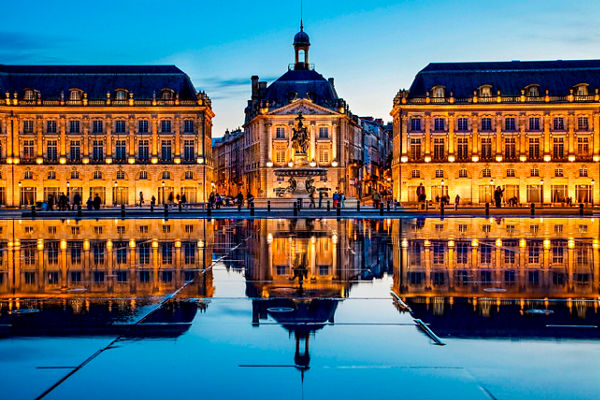
Historic Bordeaux buildings at sunset reflection

Châteaux, Rivers & Wine

Roundtrip Bordeaux, France
BOOK WITH OUR FLEXIBLE DEPOSIT NOW

8 days
5 tours
1 country
AU$2,799 from