

Embark on a Rhine River journey
Rich history and cultural landmarks await your discovery in Germany, France, Switzerland and beyond. Read on to learn about the numerous UNESCO World Heritage Sites along the Rhine River and enhance your understanding of the mechanics behind Kinderdijk’s magnificent windmills in South Holland. Delve into the origins of one of Germany’s most beloved desserts—Black Forest Cake—and explore the heart of Switzerland’s arts and culture scene in Basel, Switzerland.
Rhine
The Rhine River is one of Europe’s major waterways. Its most picturesque stretch flows through the Upper Middle Rhine Valley, known for its castle-topped hillsides, ancient towns, terraced vineyards and medieval ruins. Additionally, the river serves as a vital commercial artery, facilitating trade and transportation between Switzerland, Germany, France and the Netherlands, and supporting economic growth and cultural exchange in these regions. Read on to learn more about the history and significance of the Rhine River.
- In 1932, the German encyclopedia Knaurs Lexikon mistakenly listed the Rhine River’s length as 1,320 km (820 mi.) instead of 1,230 km (764 mi.), an error corrected by biologist Bruno Kremer in 2010.
- Germans refer to their longest and most important river as “Father Rhine.”
- The Rhine River begins as a small stream at the foot of the Swiss Alps and flows through Switzerland, Liechtenstein, Austria, France and Germany before joining the North Sea in Rotterdam, the Netherlands.
- The Rhine serves as the border between France’s Alsace region and Germany’s Baden-Württemberg.
- The Rhine River marked the northernmost frontier of the Roman Empire.
- Many UNESCO World Heritage Sites are located along the Rhine River, including Germany’s Speyer and Cologne Cathedrals and the Netherlands’ windmills at Kinderdijk.
- One of the Upper Middle Rhine Valley’s most spectacular sights is the 430-foot Lorelei Rock, associated with the legend of the maiden Lorelei.
- The Rhine River is a vital natural resource, providing significant drinking water to southern Germany.
- Today, ship travel between Basel and the North Sea is safe and convenient, but historically, castle-dwelling robber barons and customs stations made passage along the Rhine difficult until the Rhine Shipping Act of 1831.
Petite France, the jewel of Strasbourg
Strasbourg, the largest port on the Upper Rhine, offers a unique blend of cultural influences due to its location at the border of France and Germany. One of the most popular districts for both visitors and locals is the charming quarter known as Petite France.
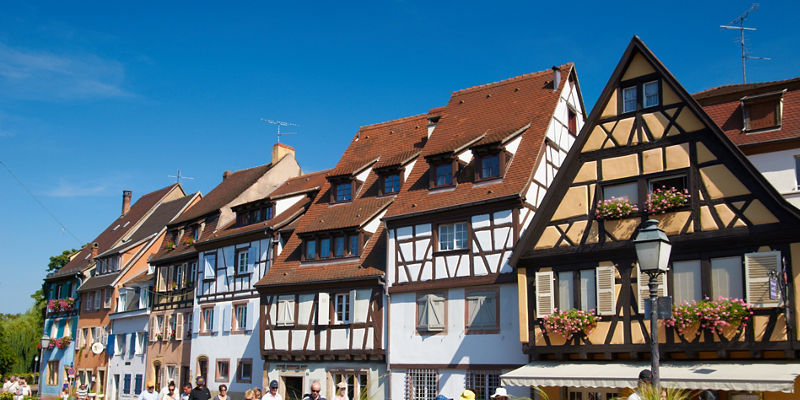
Petite France is renowned for its half-timbered houses, picturesque canals and flower-filled squares. This district is part of Strasbourg’s Grand Île, a UNESCO World Heritage Site, and is considered the city’s most romantic spot. Visitors can cross the four channels that flow through the heart of Petite France via the Ponts Couverts (""Covered Bridges""), a set of 13th-century defensive bridges that were once covered with wooden roofs.
Admire the Vauban Barrage, a system of locks and dams built in 1690, and enjoy the panoramic views it offers. St. Thomas Church, which has existed since the 12th century and became a Protestant church in 1529, features the white marble tomb of the Maréchal de Saxe, decorated with animal figures representing the places where he fought for King Louis XV. Another highlight is the Tanner’s Building, a riverside guild house that is one of the most photographed structures in the quarter.
Windmills of Kinderdijk, South Holland
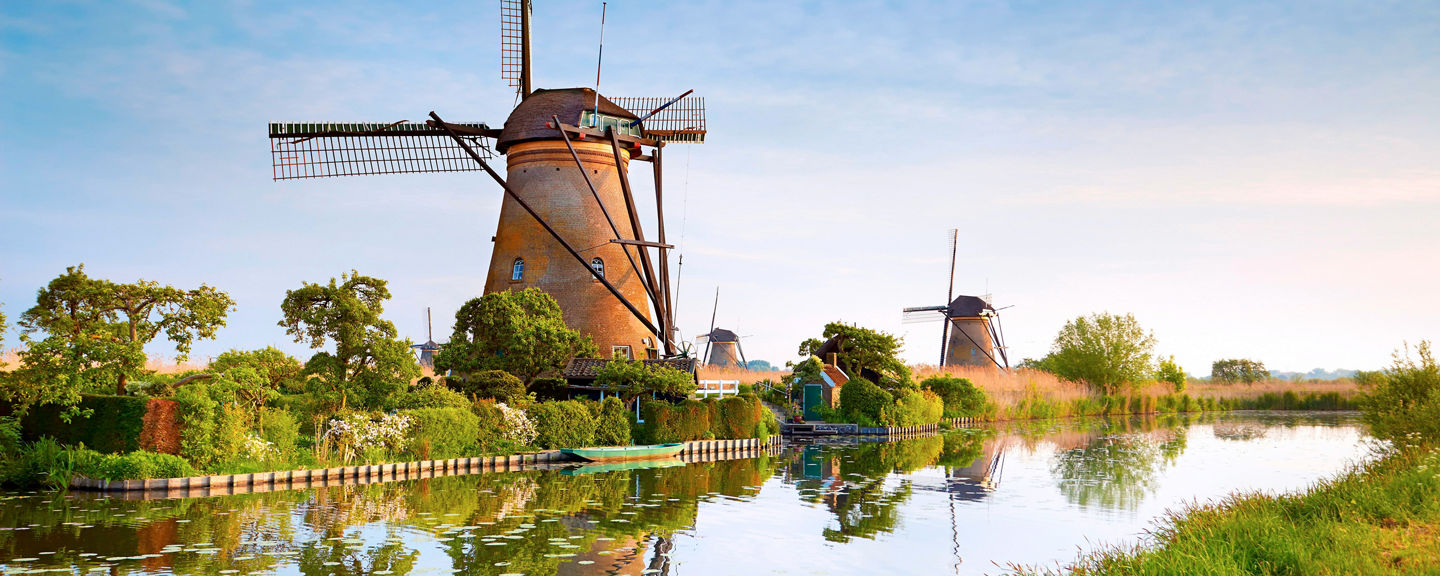
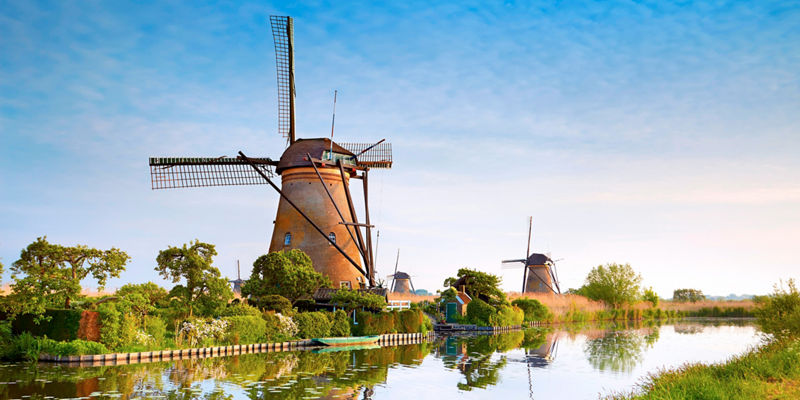
Located in Alblasserwaard province, Kinderdijk is a village community in South Holland, a region that has long been shaped by Rhine Delta waters. Kinderdijk is most known for its 19 remarkably preserved 18th-century windmills.
Granted UNESCO World Heritage Site status in 1997, the windmills of Kinderdijk are used to pump water from the polders using internal or external scoops into reservoirs on two levels. At one time, there were more than 150 windmills in the Alblasserwaard and Vijfheerenlanden area; today, they total just 28, with 19 located in the Kinderdijk area.
The eight mills that survive on De Nederwaard were all built in 1738. These bonnet mills—meaning only the top section revolves with the wind—are built from brick and have large sails that come within one foot of the ground, earning them the nickname “ground sailors.” An additional eight mills are found on De Overwaard, all dating from 1740, although one was reconstructed in the 1980s.
In the words of the UNESCO World Heritage Center: “The Kinderdijk-Elshout mill network is an outstanding manmade landscape that bears powerful testimony to human ingenuity and fortitude over nearly a millennium in draining and protecting an area by the development and application of hydraulic technology.”

-
Basel, Switzerland
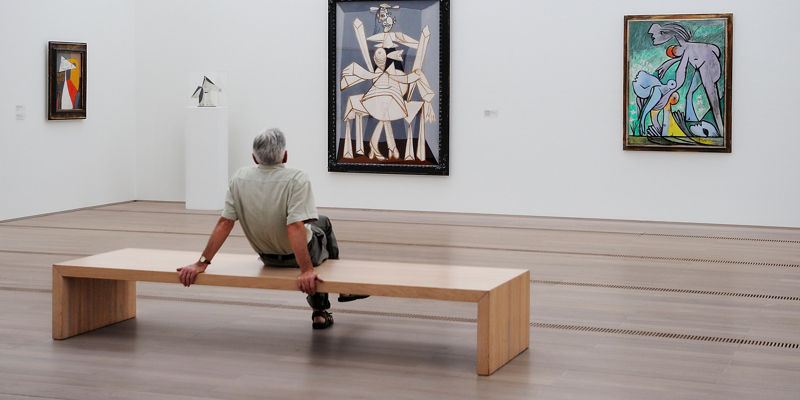
The Swiss city of Basel is home to more than three dozen museums and a plethora of art galleries and non-permanent installations and exhibits. One of its most renowned institutions is the Basel Kunstmuseum. In 1661, it became the first art collection to be made accessible to the public in Europe. Basel Kunstmuseum is also the largest art museum in Switzerland—its modernist collection has grown to such an extent that a second building was constructed across the street, accessible by a tunnel.
The Fondation Beyeler is another excellent museum to explore in Basel. It boasts an astounding collection of 19th- and 20th-century works by artists like Paul Cézanne, Vincent van Gogh, Pablo Picasso, Mark Rothko, Joan Miró, Andy Warhol, Roy Liechtenstein, Max Ernst and many others.
In addition to its museums, the city also hosts Art Basel, a renowned annual international art fair that is a showcase for contemporary and modern art. Its popularity and success led to the launch of partner Art Basel fairs in Miami and Hong Kong.
-
Dining in Rüdesheim
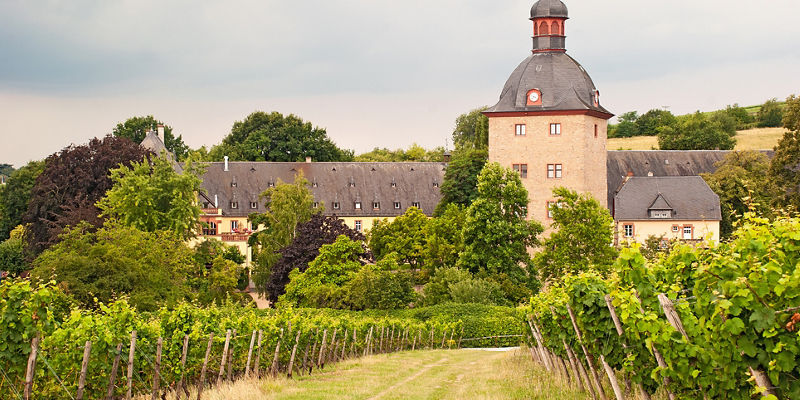
Germany’s Rheingau region is world renowned for its excellent Riesling wines, but a better kept secret is the wonderful cuisine that complements them. If you think of German cuisine as simply heavy, think again. Nowadays, the region’s most talented chefs insist on the finest locavore ingredients and prepare them in tradition-based recipes adapted for a more health-conscious diner.
This is especially apparent in Rüdesheim, where restaurant competition is fierce, and gourmets have taken notice. Expect fresh, flavorful and herbaceous cuisine that brings the best of the farm, forests and rivers right to your table.
The local bounty
Fresh white and green asparagus from hillside farms. Fresh trout from the Wisper River. Game from the Niederwald forest. Herbs from the gardens and woods of Assmannshausen. These are just a few of the staples you might find in a Rheingau pantry. They may find their way into specialties such as wild boar sausages, marinated beef sauerbraten or zwiebelkuchen, a savory onion pie. Handkäs mit musik literally means “hand cheese with music,” and you might feel like singing once you tuck into this savory marinated cheese served with onion, nuts, caraway and, typically, a glass of apfelwein, a tart cider. Or perhaps you will try a slow-roasted duck breast prepared as the Benedictine monks did, with dates and figs.
Rheingau cuisine makes good use of the many herbs that grow there, a tradition whose roots date back to the local 12th-century saint, Hildegard of Bingen, who prescribed herbs for medicinal as well as culinary purposes. For example, nutmeg is good for blood purification; fennel aids digestion; spelt benefits circulatory health; and thyme is a diuretic that also reduces fever, burns fat and calms the nerves. St. Hildegard still exerts a strong influence on the region's “slow food” cooks.
The perfect accompaniment
At its heart, Rheingau cooking is closely intertwined with the region’s wine-growing tradition. So, your meals will be perfectly complemented by a velvety red pinot noir or spätburgunde, a classic white Riesling or sylvaner, or a sweet ausleseor ice wine for dessert.
Accented by atmosphere
The quintessential Rheingau dining experience comes with a dash of charm and a healthy portion of good cheer. Find a traditional weingasthaus or cozy weinstub in Rüdesheim’s famed Drosselgasse alley. Perhaps seat yourself by the fireplace or the romantic garden. Enjoy the sound of the piano, saxophone, clarinet or violin. After such an evening, you will come to think of Rheingau cuisine not as heavy, but heavenly.
-
Discover the Unique Character of Alsatian Wines
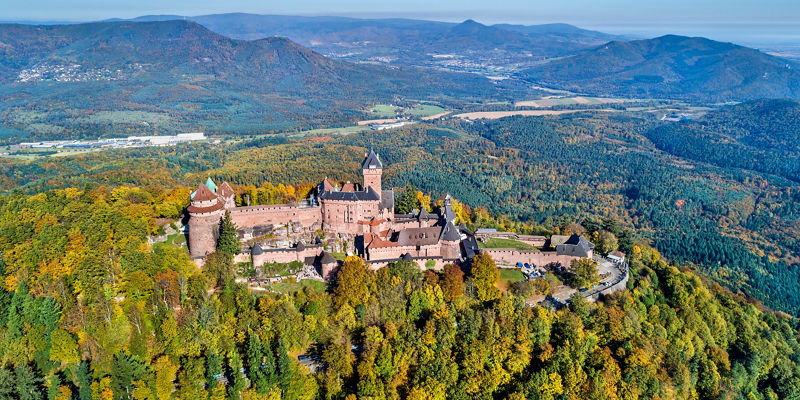
Located in the northeast corner of France, Alsace stands apart from other celebrated French wine regions. Protected by the Vosges Mountains and bordered by the Rhine, the area features a blend of glacier-influenced soils, noble grapes and one of the driest climates in France. The Franco-Germanic influences that are evident in Alsace’s culture and architecture also find expression in the region’s wines.
-
Flavors of Alsace
Alsace is legendary for its delicious cuisine, which combines fresh local ingredients, the German penchant for hearty fare and the French genius for coaxing distinctive flavors with technique and style. Cities like Strasbourg can boast an impressive number of Michelin-starred restaurants. Tasting your way through this fascinating region can be a great way to get to know it—from Alsatian cheeses and meats to local beer and the cinnamon-hued scent of glühwein (spicy mulled wine). Learn more about the region’s culinary classics below.
Choucroute garnie
The signature dish of Alsace, choucroute garnie is a savory mix of sauerkraut, onions and fresh herbs braised in Riesling. The garnie, or “garnishes,” consist of several cuts of pork—perhaps bacon, sausage and a smoked chop. It is so popular that food trucks and market stalls sell bowls to go.
Flammkuchen
Traditional flammkuchen, or tarte flambée, is a portable snack of chewy flatbread smothered with lardons, onions and crème fraîche.
Kougelhopf
Alsace’s bakers are famous for pralines, madeleines and more, but one “must-try” is the distinctive crown-shaped kougelhopf. It is made from a brioche-type dough with dried fruits and nuts, and baked in a special round, fluted pan.
Bretzels
You may notice that many bake shops hang a sign bearing the twisted knot image of a pretzel. That is because in medieval Alsace, bretzels were the symbol of the baker’s guild. But far from being just ordinary pretzels, bretzels are made from three rings of large, chewy and tangy dough dusted with a variety of sweet and savory seasonings.
Alsatian cheese
A nice accompaniment to your bretzel would be a few morsels of Alsatian cheese. The most popular is Munster, a small, creamy cheese that is made using unpasteurized milk, often sprinkled with cumin. Consider also Tomme d’Alsace, a pungent, semi-soft cow’s milk cheese whose rind is washed in Riesling to give it fruity notes. Or perhaps try bibeleskaes, a cream cheese seasoned with garlic, onion, parsley and, sometimes, bacon.
Alsatian wine
Whatever you eat, it will pair beautifully with Alsatian wine. You might choose a dry Riesling, a full-bodied Gewürztraminer or an earthy pinot gris (the perfect partner for Alsace’s heartier dishes). Pinot noir is the only Alsatian red wine; dry with hints of cherry and raspberry, it pairs perfectly with the pork dishes that all Alsatians love.
Alsatian beer
Alsace is also France’s main beer-producing region, with a plethora of breweries centered in Strasbourg working with locally grown hops. The preference is mostly for lagers, but many new microbreweries are adding more varied styles to the mix. A popular Alsatian aperitif is beer with a dash of amer, a bitter orange liqueur. Kirsch is the most common eau-de-vie, made with elderberries, strawberries or whatever fruit is in season.
Bon appétit!
-
Gourmets & the Alsace Wine Route
If you love food and wine, were it 1820 or so you might have found employment as a gourmet. Back then, a gourmet was a valet to a French wine dealer whose job it was to sample and assess the quality of various wines—a task that grew to include food sampling to determine which pairings best complemented each vintage.
Alsace is one of Europe’s oldest wine regions thanks to the Romans, who brought viticulture here, and the hillsides of the Vosges, a terroir protected from westerly winds and rain. The best way to experience the region’s wine is by exploring Alsace’s Route des Vins. As France’s oldest wine route, it is the perfect place to sample Alsace’s world-famous cuisine and satisfy your inner gourmet.
The gourmet connection
In the 19th century, Alsatian wine dealers often hired tasters called "gourmets," from the old French word groume, or groom. Armed with their trusty tâtevin cups, they would sample, rate and price wines. This required a refined culinary palate, because—as any oenophile knows—pairing certain vintages with food helps bring out the wine's best qualities. This is one reason why wine tours feature delectable nibbles along the way.
The Alsace Wine Route
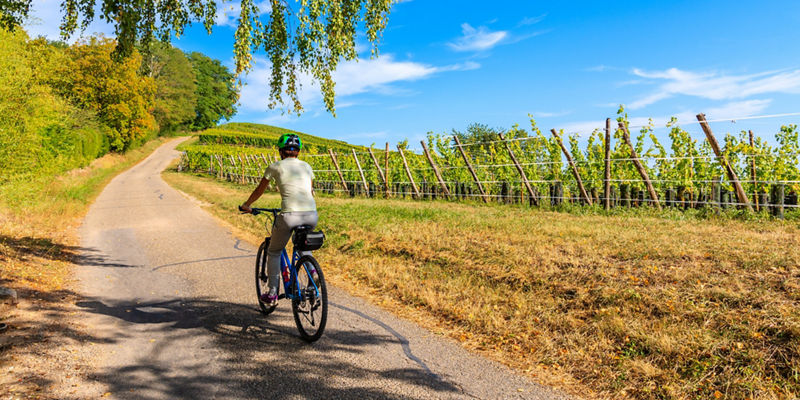
Established in 1953, this 110-mile stretch winds through 67 different wine-producing communes. They are home to more than 1,000 different wine producers, including well-known names such as Maison Trimbach, Hugel et Fils, Domaine Paul Blanck, Domaine Zind-Humbrecht and Marcel Deiss.
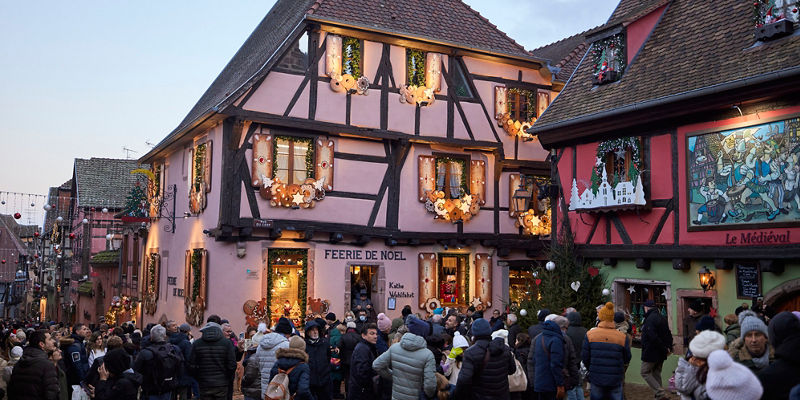
Equally intoxicating is the overall romance of the region. Scenic routes passes by lush vineyards, medieval castles and iconic, half-timbered villages straight out of a fairy tale, including Riquewihr, Kaysersberg, Colmar, Ribeauvillé, Obernai and Eguisheim. These are fascinating places to explore year-round, but between May and October wine fairs, harvest festival and special saint’s days make the atmosphere extra festive.
Varietals and inspired pairings
Alsace is the only Appellation d’Origine Contrôlée (AOC) region in France to produce mostly varietal wines—that is, wine made from a single grape. These are mainly whites based on the dominant Riesling, Gewürtztraminer, pinot gris, auxerrois blanc, pinot blanc and sylvaner grapes. Alsatian red and rosé wines come from the pinot noir grape. There are also two “late harvest” classifications—Vendange Tardive (VT) and Sélection de Grains Nobles (SGN)—sweet wines made from grapes affected by noble rot.
Come to the scenic Alsatian Wine Route, pair a glass with a bit of Alsatian charcuterie, Munster cheese or pâté de foie gras, and understand why the gourmets of old had the best job in the world.
-
How Johannes Gutenberg changed the world
Johannes Gensfleisch zur Laden zum Gutenberg’s invention of mechanical movable type printing is widely regarded as one of the most important events of the modern era.
The beginnings of a technological revolution
Gutenberg was born in 1398 to an upper-class merchant in Mainz. His father worked with the ecclesiastical mint, and Johannes learned the trade of goldsmithing—including how to do detailed work with metals. He moved to Strasbourg, where he worked with metals and gemstones while researching printing methods. He returned to Mainz in 1448.
Gutenberg built a wooden printing press with moveable type and oil-based inks that made it possible to mass-produce printed books. Prior to Gutenberg’s printing press, books were painstakingly written and illustrated by hand, one copy at a time. It is difficult to overstate the impact of his invention. The advent of the printing press played a major role in the Renaissance, the Reformation, the Age of Enlightenment and the Scientific Revolution. Gutenberg’s innovation made learning available to many, not just a few. It formed the basis of our modern system of mass education, as well as the knowledge-based economy.
The Gutenberg Bible
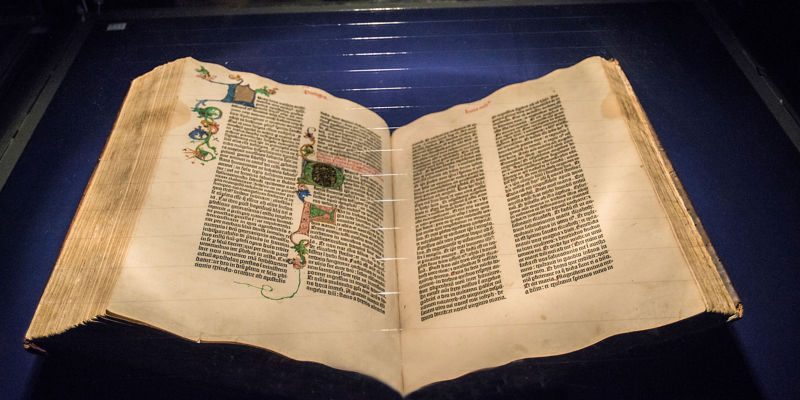
Inspiration met innovation when Gutenberg printed the book he is most associated with: The Gutenberg Bible. It was important to produce a Bible that was as beautiful as the handwritten versions produced at monasteries. The Gutenberg Bible was printed in carefully rendered Blackletter type with illuminated capital letters and other decorative flourishes throughout. Scholars of book arts celebrate its beauty.
While the printed Bibles were costly—though not nearly as expensive as the handwritten Bibles—they apparently sold out quickly. Churches, monasteries and libraries were the primary market. Sold for the equivalent of three years’ wages for a typical clerk, the Bibles would have been out of reach for most individuals. Gutenberg’s oil-based inks have lasted more than five centuries, as the 48 surviving copies of The Gutenberg Bible attest.
-
Kölsch beer
For many Germans, beer is an integral part of life. As a famous German saying notes, “It takes beer to make a thirst worthwhile.” But while beer is treasured throughout Germany, one ale, kölsch, is singularly associated with the city of Cologne. That is no accident—it is the law. Since the 1980s, the name kölsch has been strictly limited to those beers brewed in the city of Cologne. If you visit a local brauhaus, kölsch is the beverage of choice. Unlike other German brews, this straw-colored ale is quite young, but local pride has earned it a dedicated following.
A brief history
The word kölsch was first used in 1918 to describe beer that had been brewed by the Sünner brewery since 1906. The clear, pale style did not catch on at first, and during World War II breweries declined in number. But kölsch rode the wave of a postwar resurgence and today the European Union has given it a protected designation of origin.
A culture all its own
Kölsch is served in a narrow, straight sided stange. These smaller glasses ensure that the beer maintains an optimal temperature. Waitstaff, called köbes, use a special wreath-like tray equipped with round holes and a handle—known as a kranz—to deliver fresh rounds. They will continue to do so, silently and surreptitiously, until you cover your stange with your beer mat to signify that your thirst has been quenched.
-
The best castle to visit on the Rhine River
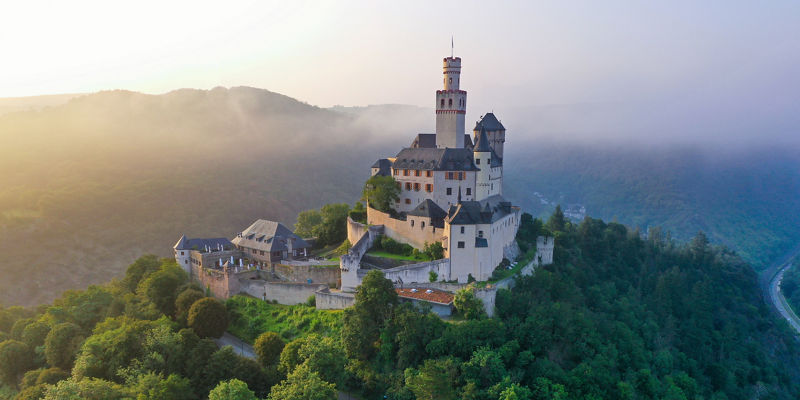
Marksburg Castle is well worth visiting along the Rhine River. It is a well-preserved structure and renowned for being the region’s only medieval castle that has never been destroyed. Perched nearly 300 ft (90 m) above the water at Braubach, it also offers stunning views of the Rhine Valley below.
The butter-churn tower at Marksburg Castle, also known as a bergfried, is a distinctive architectural feature of this structure. This tower has an upper section with a smaller diameter than the lower section, resembling a butter churn. This design provides several advantages—the ledge where the lower tower meets the upper tower acts as a useful walkway or fighting platform, while the upper tower can be used as a lookout or defensive position.
Visitors may have an opportunity to walk across the rough-hewn stone passageways as they tour the citadel. Narrow, winding staircases offer views of the wine cellar, a bedroom, dining area and the impressive kitchen of the Gothic Hall building. Another highlight is the Gimbel Collection, with its twelve life-size figurines detailing changes to armor, weaponry and combat techniques from ancient times to the early modern period.
-
The Black Forest
Germany’s Black Forest is home to stunning natural beauty, artisanal crafts, traditional dress and excellent cuisine. See why people come from all over the world to enjoy this idyllic region.
Where it is located
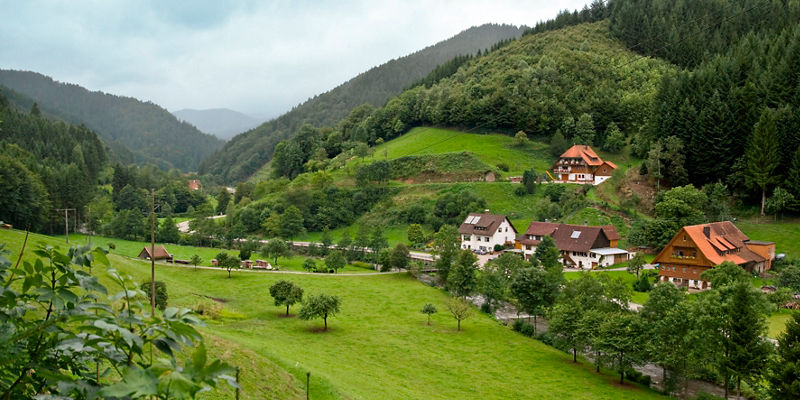
The Black Forest is a wooded mountain range in southwestern Germany. It is bordered by the Rhine Valley to the west and south, and its highest peaks climb to 4,900 feet above sea level. The Black Forest is an idyllic place, with green hills dotted with pretty villages, church steeples and the occasional tarn, or glacial lake. It is also home to some of Germany’s best-known waterfalls.
What is behind its name?
This densely forested region is called schwarzwald, German for “black forest.” But the Germans borrowed the name from the Romans, who called it Silva Nigra, Latin for “black forest.” At that time, the thick growth of conifers blocked out most of the sunlight, leaving much of the forest darkened even during the day.
Crafts and traditional dress
The Black Forest has a rich history of mining, but today its main industry is tourism. People come from all over the world to enjoy the beauty and charm of its landscapes and little towns. The region is known for skilled clockmakers: the Black Forest is where cuckoo clocks and other mechanical clocks come from. Woodcarving is another one of the area’s artistic crafts. The Black Forest is also famous for its tracht, or traditional dress, that is still worn for holiday events. The ladies wear black skirts (sometimes with floral aprons), embroidered blouses and bollenhüte, a hat adorned with red (if the wearer is unmarried) or black (if married) pom-poms. The men’s tracht varies by town, but usually includes elaborately embroidered suspenders and black hats.
A food-lover’s paradise
The Black Forest is known for excellent cuisine—there are more than a dozen Michelin-starred restaurants in the area. Black Forest ham, a smoked pork product, comes from the region, as does Black Forest Cake, a chocolate confection made with cream, sour cherries and kirsch, a colorless fruit brandy.
-
The heroic battle for Colmar
One of World War II’s most dramatic battles unfolded in and around Colmar, a charming village in the Alsace region of France. The Allies had already liberated much of the region on their way to Germany, but the Germans held on to one small area along the Rhine River that has become known as the Colmar Pocket.
The Allies’ long march across Europe
In World War II Europe, Germany claimed Alsace as its own and vowed to secure it as vigorously as its own homeland. Even after French and US troops had taken back territory to the north and south of Colmar and pushed in from the west, Himmler’s troops were prepared to give their lives to defend it, despite the fact that they had been surrounded and pushed up against the Rhine.
A swift strike leads to victory
A tense standoff lasted about two months, prolonged by logistical issues with troops and weaponry on the Allied side, by challenges created by the terrain and by one of Europe’s coldest and snowiest winters in memory. On January 20, 1945, French and US troops began moving in from opposite fronts, displaying great heroism and changing the course of the war. By February 9, the Germans had been removed. The Colmar Pocket Memorial Museum and other sights there pay tribute to the fallen who gave their lives for France.
-
The history of Black Forest Cake
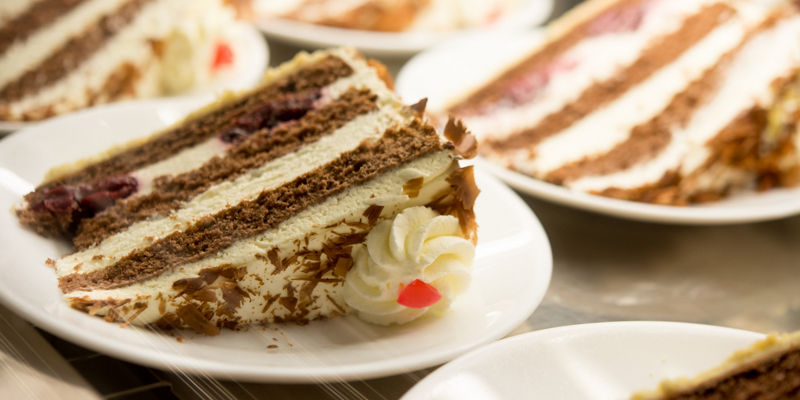
Black Forest Cake, also known as Schwarzwälder Kirschtorte, is a classic dessert famous for its layers of chocolate cake, cherries, lashings of whipped cream and drizzle of kirsch (cherry brandy). This iconic treat comes from Germany’s Black Forest region, near the Rhine River Valley, where cherries and kirsch are local specialties. While its exact origins are debated, the cake likely evolved from traditional desserts in the area and became popular in the early 1900s, with the first official recipe being recorded in 1934.
The cake’s name reflects its roots—the dense, dark forests of Germany’s Black Forest region. Its layers of chocolate sponge, cherry filling and whipped cream are typically topped with chocolate shavings to resemble the forest’s trees. Over time, Black Forest Cake has become a favorite around the world. Whether enjoyed at a celebration or as a sweet afternoon treat, this dessert remains a timeless symbol of German baking tradition.
-
The windmills of Kinderdijk
The village of Kinderdijk, in the province of South Holland, is home to the largest concentration of historic windmills in The Netherlands. (The Netherlands and Belgium are called “the Low Countries” because much of their land is at or below sea level—and consequently subject to flooding.)
Discover the history of these iconic engineering marvels, as well as the legend that gives the village its name.
Harnessing wind, driving out water
Kinderdijk is located in a polder at the confluence of the Lek and Noord rivers. A polder is a low-lying tract of land that is protected from surrounding water by embankments or dikes. To drain the polder, a system of 19 windmills was built in the 18th century. Part national icons and part engineering marvels, the windmills are based on a clever technology: the wind power collected by rotating sails or blades drives a pump system that moves water from the polder into drainage canals, and ultimately into a reservoir.
The story behind the name
Kinderdijk means “children's dike” in Dutch. Legend has it that after the terrible Saint Elizabeth flood of 1421, a man walked along the dike to assess the situation. In the distance, he saw a wooden cradle floating on the water. As it came nearer, the man noticed a cat jumping back and forth in the cradle so that no water could get into it. When the cradle came close enough for the man to lift it out of the water, he saw that a baby was sleeping in the cradle, perfectly dry. The cat had kept the cradle afloat. This folktale, handed down for centuries, has been published in English as The Cat and the Cradle.
Standing at the ready
Although the windmills were replaced by a steam-powered pumping station in the 19th century, then by a diesel pumping station in the 1920s, they have proven their worth when fuel was not available, including during World War II. They are maintained in operating condition and are ready to work if called upon. Like lighthouses, most of the windmills are set up to house caretakers. Visitors to Kinderdijk may go inside one of the windmills to see its living quarters as well as its machinery.

Rhine Highlights
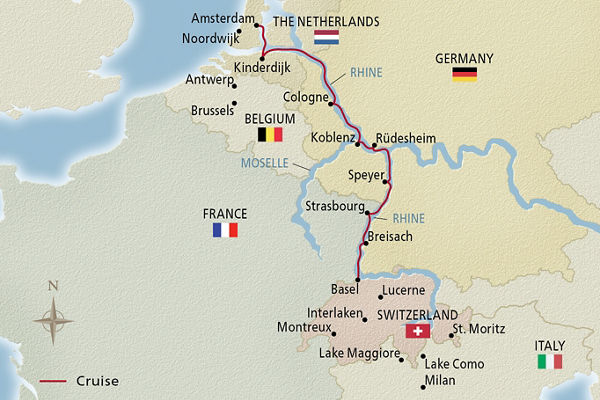
The Rhine River takes you into the heart of Middle Europe, where stately castles, fairytale villages and cultural centers have long been witnesses to history. Traveling through the Netherlands, Germany, France and Switzerland reveals historic treasures, natural beauty and vibrant capitals. Here are some sample highlights found along the Rhine River:
- Amsterdam’s charming canals and gabled houses
- Windmills of Kinderdijk, a UNESCO World Heritage Site
- Rüdesheim’s wine-growing region, the Rheingau
- Marksburg Castle, perched above scenic Braubach
- Delightful Strasbourg, home to a distinct French-German culture
- Breathtaking views of the legendary Black Forest
- Charming Colmar’s medieval “Little Venice” artistic quarter
- Kölsch—a light, crisp beer—that is brewed only in Cologne
- Mythical Lorelei Rock at the Middle Rhine Gorge
- Stunning Heidelberg, inspiration to writers and philosophers
Destination Insight Videos

Romantic Middle Rhine (2:40)
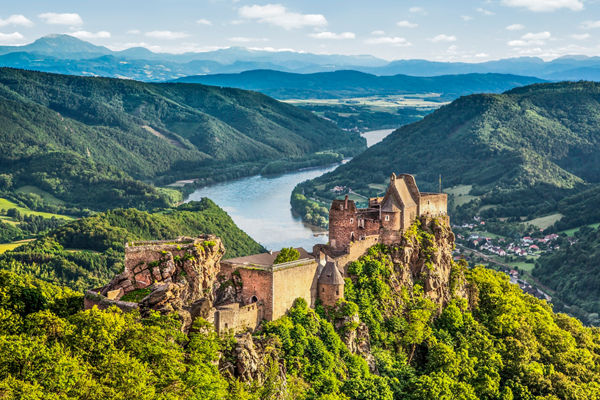
Experience the majestic stretch of the Rhine River known affectionately as the “Romantic Middle Rhine.” Winding past quaint villages and medieval castles, this idyllic waterway offers a window into the past and unmatched vistas.

Gothic Cologne Cathedral (5:13)
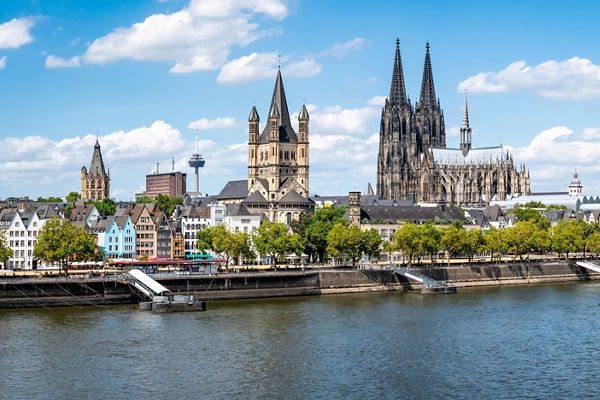
Explore the history of this ornate architectural masterpiece. Towering over the Rhine, the majestic Cologne cathedral has been a beacon for pilgrims from around the world for centuries.

Follow us to the famous windmills of Kinderdijk (14:36)
Journey with us to the Dutch countryside as we explore the iconic windmills of Kinderdijk, a UNESCO World Heritage Site. Get a glimpse at the inner workings of these technological marvels—still in operation today—and learn about the fascinating history of these windmills, which date back hundreds of years. During the tour, we are also introduced to the Jantina, a 125-year-old vessel that has been restored to carry passengers to the Blokker Windmill—an experience you can enjoy first-hand when sailing with us in the Netherlands. Following our explorations, learn more about this celebrated Dutch destination during a question and answer session with Jan-Willem de Winter, Head of Product Development for Kinderdijk World Heritage.
Rhine Travel FAQ
All-Inclusive Itineraries—Rhine
Choose one of our enriching, all-inclusive voyages and discover the many benefits of exploring in Viking comfort.