

Immerse yourself in the charms of Amsterdam
Amsterdam captivates visitors with its exceptional museums, rich Golden Age history and elegant architecture. Read on to discover popular Dutch street snacks, learn about the extensive collections of the Rijksmuseum and enhance your knowledge of the city's legendary canals.
Amsterdam
Amsterdam, the principal commercial center of the Netherlands, is located on the IJsselmeer, a freshwater lake in the northern and central portion of the country. While Amsterdam is the capital of the Netherlands, the primary seat of government is in The Hague. Still, the royal family is occasionally in residence at the Royal Palace, located on Dam Square. The city, which spans 64 sq mi (165 sq km), is divided by a network of concentric canals into 90 islands connected by more than 1,200 bridges.
Amsterdam has a temperate oceanic climate, characterized by mild summers and cold—but rarely freezing—winters. The average temperature ranges from around 38.5 °F (3.5 °C) in January to 64.5 °F (18 °C) in July and August. Rainfall is common, occurring relatively evenly across all seasons.
The city began as a small medieval settlement on the Amstel River, where it met the IJ, an inland arm of the Zuiderzee (now the IJesselmeer). The city’s name is derived from the dam that was built to control the Amstel’s flooding. The oldest part of Amsterdam still contains buildings from this early period, including the Oude Kerk (Old Church), which was built during the 13th century.
The Dutch Golden Age (r. 1609-1713) refers to a significant period of Dutch prosperity, built on its powerful trade networks—both within Europe and abroad, as with the Dutch East India Company. Most of the Dutch elite during this period were wealthy merchants, financiers and government officials, and there was also a thriving middle class of artisans, sailors and small businessmen.
The economic prosperity of this era was accompanied by achievements in the arts, philosophy and literature. Painters—including Frans Hals, Jan Steen, Johannes Vermeer and Rembrandt van Rijn—captured realistic scenes from everyday life that reflected the prosperity of their surroundings. Characterized by a dramatic use of light and shadow, many of the paintings from this era are still considered some of the world’s finest masterpieces.
Today, Amsterdam boasts a lively arts scene and is also home to some of the world’s most renowned museums. Here are some of the key cultural destinations that you may see during a visit to Amsterdam:
- Rijksmuseum—The extensive holdings of this national museum offer an excellent introduction to the country’s art history. There is an especially strong collection of Dutch Golden Age masterpieces, including major works by Rembrandt and Vermeer.
- Van Gogh Museum—In this chronologically organized museum, you can view the world’s largest collection of Vincent van Gogh’s works. With more than 200 paintings, plus hundreds of sketches and letters, it offers a brilliant overview of the artist’s life and work.
- Stedelijk Museum—Dedicated to modern and contemporary art, the Stedelijk features an impressive collection of works by artists such as Andy Warhol, Marc Chagall, Piet Mondrian and Yayoi Kusama.
- Moco Museum—Located in a 1904 townhouse, the Moco Museum focuses on modern, contemporary, digital, immersive and street art. The collections feature works by Banksy, Damien Hirst, Jeff Koons, Marina Abramović and Takashi Murakami.
- The Royal Concertgebouw—This renowned concert venue, first opened in 1888, is known for its exceptional acoustics. It is often ranked among the world’s top concert halls, alongside famous venues such as Carnegie Hall in New York, Boston’s Symphony Hall and Vienna’s Musikverein.
- Dam Square—Located at the original location of the dam in the Amstel River, this town square is the city’s central gathering point. The Royal Palace is situated on the west end of the square, next to the 15th-century Gothic Nieuwe Kerk (New Church).
- Jordaan neighborhood—This popular neighborhood is home to many art galleries, specialty shops, canal-side restaurants and notable landmarks, including the Anne Frank House.
- Keukenhof Gardens—Every spring, Keukenhof Gardens bursts with a vibrant, multicolored blanket of flowers. More than 7 million blooms are grown here, including daffodils, hyacinths, lilies, bluebells and crocuses. Strolling among 100 varieties of tulips on these 15th-century hunting grounds is one of Amsterdam’s finest delights.
- Oude Kerk (Old Church)—The oldest structure in Amsterdam, the Oude Kerk was built in 1213 and consecrated as a Catholic church in 1306. In 1578, it became Calvinist Dutch Reformed Church.
- Magere Brug (Skinny Bridge)—This famous bridge across the Amstel River was originally built in 1691 according to an Old Dutch design known as a double-swipe bridge. In 1871, as traffic along the waterway increased, a wider bridge replaced the original narrow one, and in 1934, it was replaced again. It is no longer skinny, but it is still celebrated as one of the most beautiful bridges in the city.
- Zaanse Schans windmills—These iconic Dutch windmills, a popular half-day trip destination, are located on the Zaan River, 20 minutes from Amsterdam. The historic village surrounding the windmills is home to millers, pewter casters, cheese makers, clog makers and other traditional Dutch craftspeople.

-
Amsterdam's canals
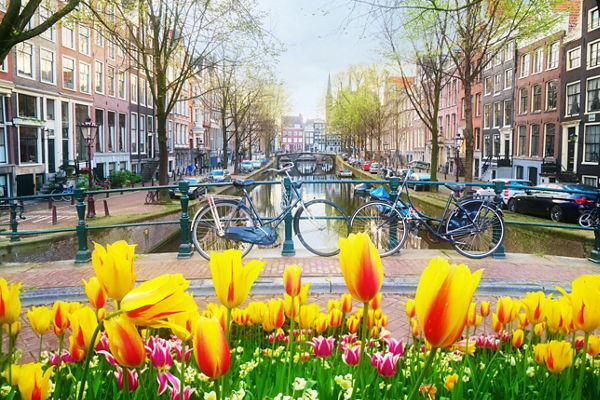
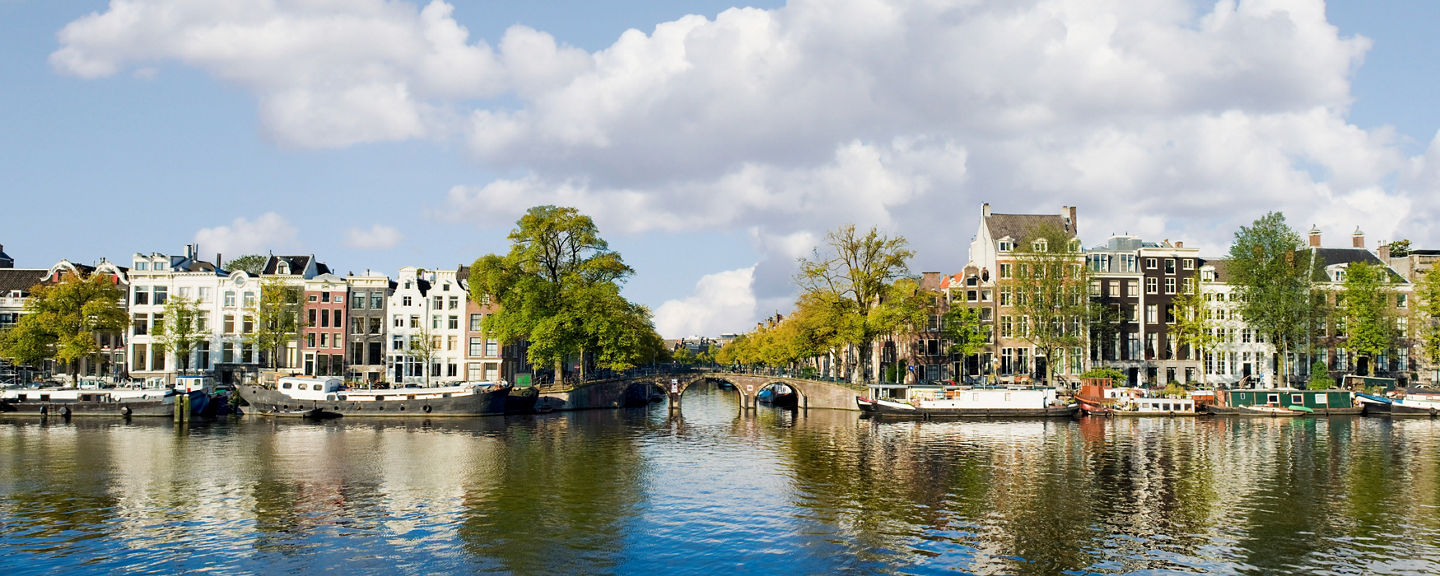
With its historic streets, abundant bridges and elegant gabled houses, the Dutch capital of Amsterdam is a delight to explore. Laced with 165 canals—totaling a combined length of 60 mi (100 km)—the city has become known for its concentric waterways, designated a UNESCO World Heritage Site in 2010. This intricate network stands as an enduring testimony to 17th century engineering and large-scale urban planning.
Founded around 1250 with the building of a single dam, Amsterdam was a small fishing village located on the banks of the Amstel River. Protected by the dam, the city grew, and its single canal functioned well for draining and military defense. During the Middle Ages, Amsterdam became an important center for maritime trade, but by the end of the 16th century, the city had run out of space within the dam’s confines.
During the early 1600s, the mercantile class came up with a plan to expand the city with a system of four concentric half-circle canals. Construction began in 1613, proceeding from west to east. The first three canals were designated for residential development. The fourth, outer canal served for defense and water management. As time passed, hundreds of narrow streets and smaller canals fanned out from the center, crossing the semicircles and creating 90 islands and 1,281 bridges within the city limits.
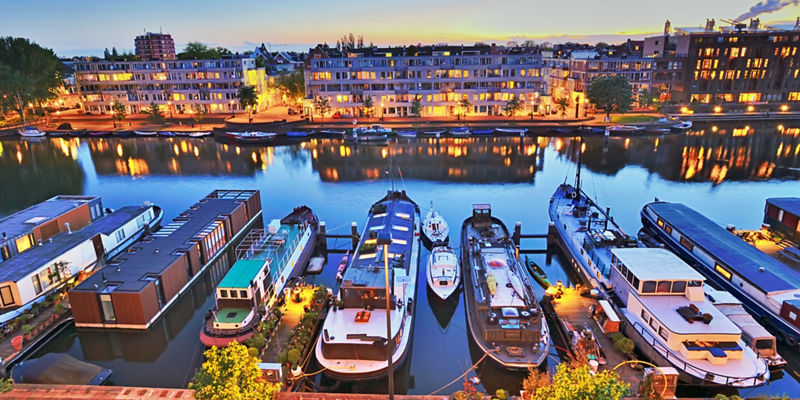
Today, these canals are home to residents who live on one of Amsterdam’s many houseboats. A municipal canal-bus system travels along three different routes throughout the city, providing locals with an easy way to get to and from work. In winter, when conditions allow, locals enjoy ice skating on the frozen waters before retiring to a local eatery for a cozy bowl of snert (pea soup).
-
Rijksmuseum
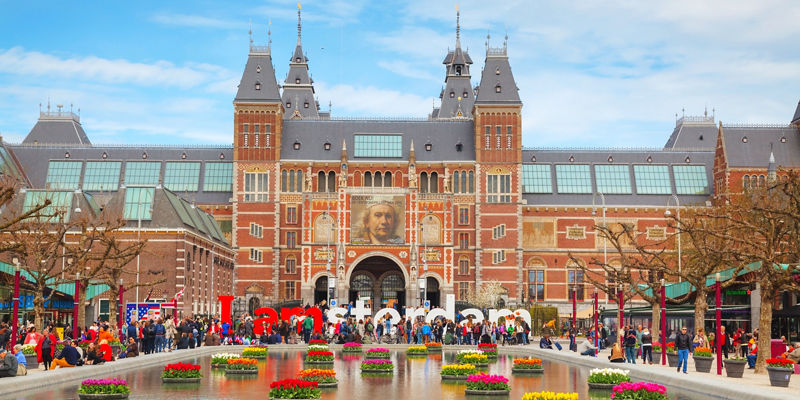
One of Amsterdam’s top attractions, the Rijksmuseum is located on the Museumplein alongside the Van Gogh Museum, Stedelijk Museum and Concertgebouw. As the Netherlands’ national gallery, it features a wide range of Dutch historical artifacts, paintings and sculptures, dating from the 13th century. Its extensive collection features pieces by many prominent Dutch Masters, including Johannes Vermeer, Jan Steen and Rembrandt van Rijn. Highlights include Vermeer’s The Milkmaid (c. 1660), Jan Davidsz de Heem’s Still Life with Flowers in a Glass (c. 1650 – 1683), Jan Asselijn’s The Threatened Swan (c. 1650) and Rembrandt’s largest, most famous canvas, The Night Watch Militia Company of District II under the Command of Captain Frans Banninck Cocq (1642).
The original museum was founded in 1800 at The Hague to exhibit the private collections of wealthy Dutch families. In 1808, it was moved to Amsterdam, but a new facility was needed. A design contest was held, won by Dutch architect Pierre Cuypers. Construction began in 1876, and the new museum opened in 1885. Since then, the Rijksmuseum has experienced extensive additions and decorative changes.
The most recent renovation (2003-2013) brought Cuypers’ original architectural plan back to life. Instead of housing painting, applied arts and history in separate sections of the building, the collections are now organized so that they tell a single chronological story—that of Dutch art and history from the Middle Ages through the present day.
-
Street foods of Amsterdam
Across Amsterdam, walking and bicycling—and ice skating in winter—are preferred modes of transportation for many locals. To satisfy the hunger of this physically active population, the streets of most major commercial areas are lined with food stalls, kiosks, food trucks and snack bars. Each may specialize in a particular treat, but if you want to sample a variety of snacks, duck into an automatiek—an automat-style snack bar at which you can select your favorite foods from a wall of tiny glass windows. While you can sometimes pay for your food at a counter, more often you will simply place a few coins in a slot, vending machine-style.
Given its cosmopolitan culture, Amsterdam boasts a wide array of food stalls selling everything from döner kebabs and shawarma to Indian curries and patat (french fries). For quintessentially Dutch street fare, try the following:
One of the most popular Dutch snacks is a stroopwafel—two wafer-thin waffle cookies sandwiched with caramel syrup. Conveniently, they are available in lid-sized rounds to top your cup of coffee, which warms the cookies and softens the filling.
Poffertjes are small buckwheat pancakes dusted with sugar and dabbed with butter. They are often served with toppings like syrup (stroop), whipped cream (slagroom) or fresh berries. Popular year-round, they are especially prevalent during the fall and winter; on street corners and at Christmas markets, it is common to see people huddled over paper plates, enjoying these warm, puffy dough pillows with a tiny fork.
For a savory snack, try bitterballen—crunchy, fried balls of chopped beef, beef broth, flour, butter, herbs and spices. A favorite bar food, they pair well with beer and are typically served with mustard for dipping. Some street vendors improvise, filling their bitterballen with chorizo, goat cheese, mushrooms or even truffles.
Vegetarians might enjoy stamppot, a savory purée of hot mashed potatoes mixed with other vegetables, such as kale, leeks, turnips, sauerkraut, carrots or onions. There are also versions made with fruit, including apples (called hete bliksem, or “hot lightning”). Sometimes stammpot is served with a side of smoked rookworst sausage or gherkin pickles.

Amsterdam Highlights
Traveling to Amsterdam provides the opportunity to uncover captivating art and architecture, sample regional delicacies and discover fascinating history. Here are some highlights you may experience during your time in this lively city:
- Cruise along Amsterdam’s canals in a glass-topped boat
- Stroll among springtime tulips in Keukenhof Gardens
- Explore the galleries of the world-renowned Rijksmuseum
- Tour the Portuguese Synagogue and former Jewish Quarter
- Discover Dutch history at a patrician canal house museum
- Take in the historic treasures of the stately Royal Palace
- Sample renowned Dutch cheeses like Edam and Beemster
- View the Oude Kerk, Amsterdam’s oldest building
- Wander through the historic Jordaan District
- See the Anne Frank House
- Try rijsttaffel, a classic medley of Dutch-Indonesian dishes
- Peruse masterpieces at the Van Gogh Museum
Destination Insight Videos

At Home in Amsterdam with Linda (12:51)
Explore one of the world’s most iconic cities, Amsterdam, with local guide Linda van Zanten. Living in Amsterdam for nearly a decade and working as a proud certified national guide, Linda shows us the city’s celebrated landmarks, including Centraal Station, the Jordaan District and Dam Square. When visiting Amsterdam, sampling the city’s famous Dutch pancakes is a must, and in addition to answering viewers’ questions during the livestream, Linda shares her favorite pancake topping.

Get a glimpse into Amsterdam’s past with guest lecturer Sherry Hutt, PhD (59:03)
Discover the fascinating history of an iconic European city with guest lecturer Sherry Hutt, PhD, who presents “Amsterdam—Eight Centuries Along the Canals.” Founded as a small medieval settlement on the shores of the Amstel River in the Netherlands, Amsterdam later flourished as a center for finance and trade, reaching extraordinary artistic heights during the 17th-century Dutch Golden Age. Discover the origins behind many of the things that Amsterdam—and the Netherlands—is famous for, including tulips and chocolate, as Dr. Hutt shares insights into this canal-laced city.

Exploring Holland - Amsterdam to Kinderdijk (30:48)
Long-time Viking family member and renowned British photographer Alastair Miller begins his journey in Amsterdam, where he reveals the cultural treasures of the Netherlands’s historic capital. Join Alastair as he peruses unique shops (Posthumuswinkel) and a colorful flower market, pedals through the city and visits the owner of a houseboat museum. After stepping on board Viking Kara, one of our award-winning Viking Longships, he sails to Kinderdijk to meet with locals who care for the iconic windmills.

Explore the fascinating history of museums and masterworks in Amsterdam and Bruges with Viking Guest Speaker Robert Schonfeld (45:02)
Join Viking Guest Speaker Robert Schonfeld as he shares insights into the essential museums to visit in Amsterdam and Bruges, during his talk, “Museums, Masterworks & More in Amsterdam & Bruges.” Robert is an art and design historian, and his extensive career has included almost every role in the art world—photographer, collector, curator, teacher, adviser and dealer. During this fascinating presentation, he draws from his years of experience working at Sotheby's and with some of the most prominent private collectors and public institutions in the world.
Amsterdam Travel FAQ
All-Inclusive Itineraries—Amsterdam
Choose one of our enriching, all-inclusive voyages and discover the many benefits of exploring in Viking comfort.