

Set sail along the Douro River
Discover the picturesque beauty of Portugal’s Douro River Valley from the unique vantage point of its tranquil waters. With picturesque terraced vineyards and charming villages, this breathtaking region is sure to delight. Read on to learn more about Portugal’s most famous rosé, explore the captivating Museu do Douro and enhance your knowledge of cork production.
Douro
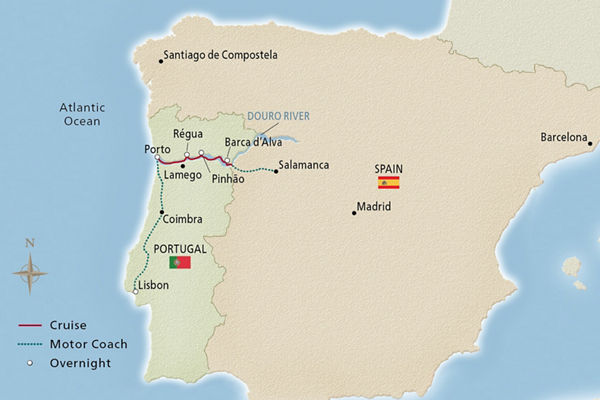
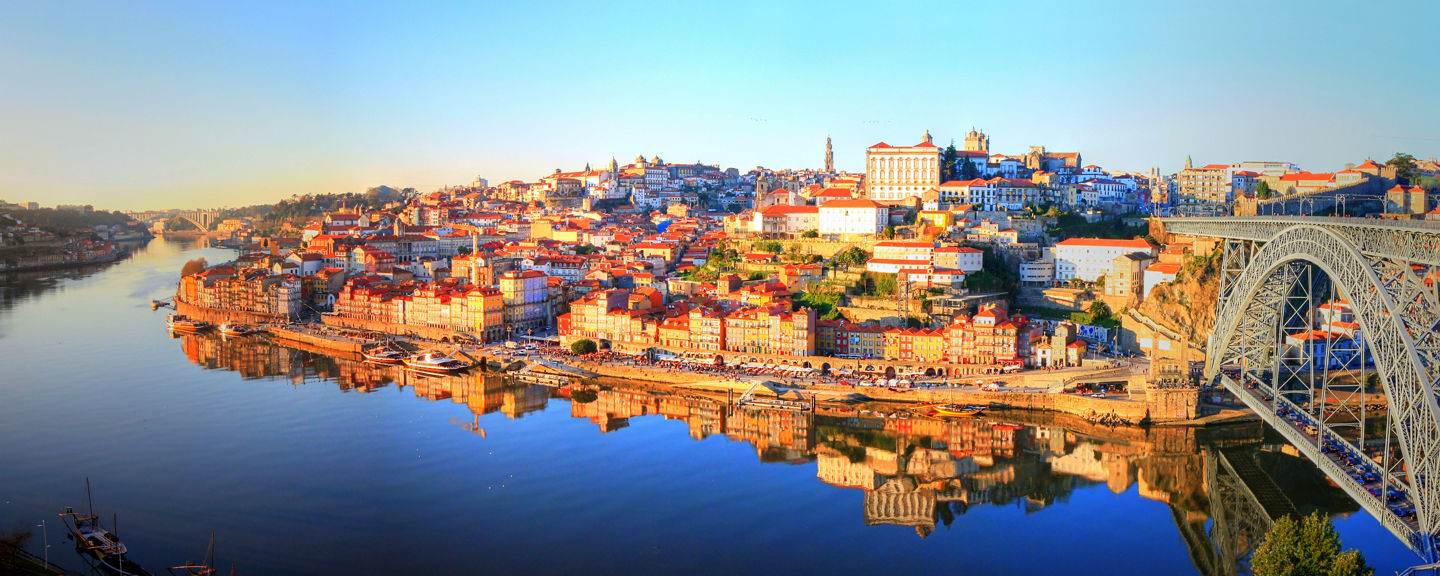
On a journey spanning 557 mi. (896 km), the Douro River begins its leisurely course in north-central Spain, passing ancient towns and navigating narrow canyons to reach the border of Portugal. There is a train that follows the Douro along the majority of its spectacular route, but it is only by traveling on the river itself that you can fully appreciate the mighty landscapes that the water has carved out over time.
Once in Portugal, the river winds its way through historic cities and towns like Porto, Régua and Pinhão. Many of the notable buildings that line the riverbank around Porto’s historic center have connections with the great wine-producing industry that is at the very heart of the Douro Valley. Wine has been produced in the area for more than 2,000 years, but it was not until 1756 that the industry became organized and internationally recognized. Further evidence of the wine trade’s dominance in these parts can be found across the river from Porto—in the city of Vila Nova de Gaia, which is home to the famous port wine cellars.
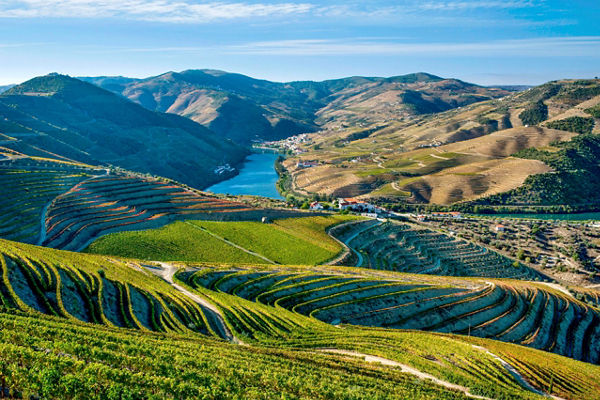
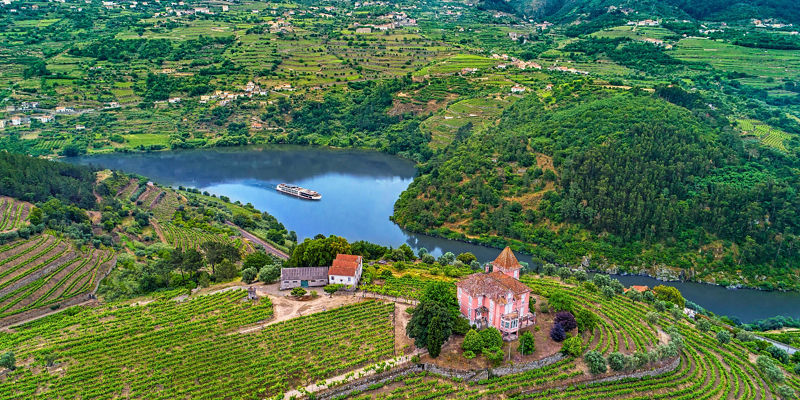
Farther upstream in the Alto Douro Wine Region, recognized by UNESCO in 2001 as a World Heritage Site, winding roads pattern the landscape, leading up to wonderfully lush vineyards in which many grapes are still picked by hand and crushed by foot. Gleaming white quintas, or wine estates, are visible from the river and offer a tempting glimpse of a traditional way of life that has existed for centuries.
Situated in the demarcated Douro Region, in the charming vineyard town of Favaios, Quinta da Avessada is an ancient site that has long produced one of the richest wines of the Douro region. The area’s famous port wine has been cultivated for more than 300 years, beloved for its characteristic full-bodied sweetness. According to the guidelines established by the European Union’s Protected Designation of Origin, only wine produced in the Douro Valley may be labeled “port” or “porto” (although this is not required in the US).
The Douro River region is home to more than just people. Over the centuries, the river has carved magnificent gorges into the Portuguese landscape near the Spanish border. These steep banks, known as arribas, provide a haven for all sorts of wildlife that live off the river’s ecosystem. Golden and Bonelli’s eagles, black storks, and Griffon and Egyptian vultures can be seen soaring through the air or keeping watch from nests built high in the rocks along the hillsides. On the ground, endangered Iberian wolves roam the land, keeping the wild boar population in check, while wildcats search for grouse or rabbits and deer and ibex forage in the forests.

-
Fado
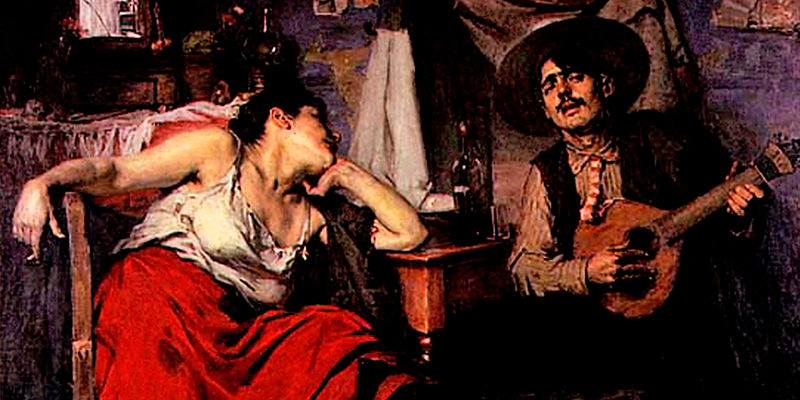
Recognized as an expression of Intangible Cultural Heritage by UNESCO in 2011, fado is a Portuguese musical style known for its emotional intensity, poetic lyrics and haunting melodies. Fado has been performed in the streets, taverns and neighborhoods of Lisbon for nearly two centuries and remains one of the country's most cherished cultural expressions.
Its origins can be traced to the working-class districts of Lisbon during the early 19th century, particularly in neighborhoods such as Alfama, Mouraria and Bairro Alto. Historians believe fado emerged from a blend of influences, including Portuguese folk traditions, Afro-Brazilian musical styles and songs brought to the city by sailors, merchants and immigrants. As a bustling Atlantic port, Lisbon served as a meeting point for cultures from Europe, Africa and South America, helping shape the music’s unique sound.
The name derives from the Latin term fatum, meaning "fate" or "destiny," themes that frequently appear in its lyrics. Many songs explore love, loss, longing and saudade, a uniquely Portuguese concept expressing a deep sense of yearning for something absent or unattainable. This emotional depth is what gives fado its enduring appeal.
Traditionally, the performances center on a solo singer, known as a fadista, accompanied by a classical guitar and the Portuguese guitar—a distinctive, pear-shaped 12-string instrument. Performances often take place in intimate venues known as casas de fado, where audiences listen in respectful silence as singers convey stories of destiny, heartbreak and hope.
One of the genre’s most influential figures was Amália Rodrigues, often called the "Queen of Fado." During the mid-20th century, she helped transform a local Lisbon tradition into a globally recognized art form. Her recordings and performances remain highly influential today, and visitors can learn about her legacy at the Casa-Museu Amália Rodrigues, a museum that was established in her longtime home.
Today, fado continues to thrive in Lisbon. Passed down through generations, it remains a living tradition that connects the city to its past while continuing to evolve. The genre continues to gain international recognition through acclaimed artists such as Ana Moura, one of Portugal’s most celebrated fado singers and the godmother of the Viking Hemming. Whether heard in a centuries-old tavern in Alfama or on a concert stage, this rich cultural tradition offers visitors a powerful expression of Lisbon’s history, passion and enduring spirit.
-
Pastel de nata
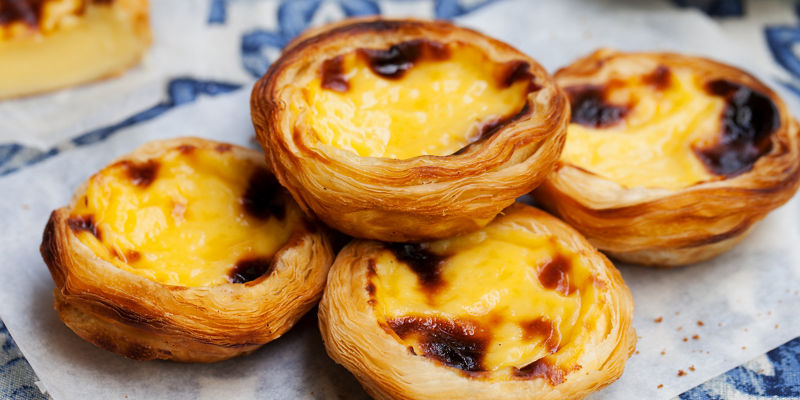
Few foods are more closely associated with Lisbon than the pastel de nata, Portugal’s famous custard tart. With its crisp, flaky shell and creamy custard filling caramelized to golden perfection, this beloved pastry has become a symbol of Portuguese culinary culture and an essential part of any visit to Lisbon.
The origins of the pastel de nata can be traced to the Jerónimos Monastery in the Belém district. During the 18th and early 19th centuries, monks used large quantities of egg whites to starch clothing and linens, leaving an abundance of egg yolks. Rather than waste these ingredients, they incorporated them into a variety of desserts, eventually creating this signature treat.
The next chapter in the dessert’s history is linked to a turbulent period during the early 19th century. In 1820, the Liberal Revolution sparked political and social reforms that gradually weakened the influence of the monarchy and the Catholic Church. In 1834, the Portuguese government dissolved monasteries and convents and confiscated many church properties. Facing the loss of their traditional sources of support, the monks began selling their pastries. Soon afterward, the recipe was acquired by a local sugar refinery, which opened a bakery in 1837 to produce the tarts commercially. That bakery, known today as Fábrica de Pastéis de Belém (Belem Pastry Factory), continues to use its closely guarded recipe and remains one of Lisbon's most famous culinary landmarks.
Preparing pastéis de nata (the plural of pastel de nata) requires skill and precision. The recipe begins with a laminated dough similar to puff pastry, rolled into thin layers that develop into a crisp, flaky shell. The filling is made from egg yolks, milk or cream, sugar and flour, cooked into a smooth custard. The tarts are then baked at very high temperatures, allowing the tops to develop the characteristic browned and lightly blistered surface that distinguishes an authentic pastel de nata.
Today, pastéis de nata are enjoyed around the world, but Lisbon remains their spiritual home. Locals often pair them with a strong espresso, enjoying them as a morning treat or afternoon snack. Many cafés serve them dusted with cinnamon or powdered sugar, a traditional accompaniment that enhances their rich flavor. Whether sampled in a neighborhood bakery or the café of the famed Fábrica de Pastéis de Belém, the pastel de nata offers a delicious taste of Lisbon’s history, culture and enduring culinary traditions.
-
Catholicism in Portugal and Spain
With an estimated 1.2 billion members, the Roman Catholic Church is the world’s largest Christian institution. It has played a pivotal role in the history of Western civilization. For centuries, the Catholic Church was the repository of much of the Western world’s written knowledge. It continues to be the predominant religion in Portugal and Spain.
Branches, teachings and liturgy
While the Church teaches that its doctrine is unchanging and infallible, Catholicism does have several distinct branches, including monastic communities such as the Jesuits, Franciscans and Dominicans. The basic teachings are Trinitarian—one God made up of three divine persons: the Father, the Son (Jesus Christ) and the Holy Spirit. Catholic worship is strongly traditional and liturgical. It focuses on the Catholic Mass, during which the Eucharist is celebrated and received by baptized members of the Church.
Education and social action
Centering on the family unit, Catholic social teachings emphasize education and social action in the form of support for the poor and afflicted. There are many Catholic universities, schools, missions, shelters, hospitals and charitable institutions around the world.
The church in Spain and Portugal
By the Middle Ages, Catholicism was widespread in Iberia (Spain and Portugal), with many missions there. The Church played a significant role in the Reconquista, or “reconquest,” during which Muslims and Jews were either expelled or subsumed into the Church. Today, the influence of the Roman Catholic Church remains strong throughout the area. Approximately 81% of the Portuguese population is Roman Catholic, and 71% of Spaniards identify with Roman Catholicism.
-
Luiz I Bridge
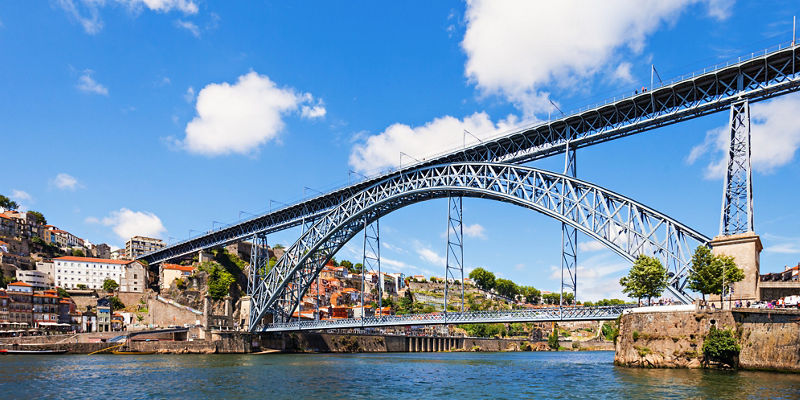
Rising high above the Douro River, the Luiz I Bridge, also known as Ponte de Dom Luís I, has become one of Porto's defining landmarks. Linking the historic heart of Porto with Vila Nova de Gaia, the bridge serves as both a practical river crossing and a powerful symbol of the city's industrial heritage. Its graceful iron arch dominates the waterfront skyline, reflecting the engineering ambition and economic growth that transformed Porto in the modern era.
The story of the bridge begins in the second half of the 19th century, a period of rapid industrialization throughout Europe. As Porto expanded and trade along the Douro intensified, the existing floating bridge connecting Porto and Vila Nova de Gaia could no longer accommodate the increased movement of people and goods. City leaders recognized the need for a solution that would strengthen the connection between the two riverbanks.
Construction of the bridge began in 1881 under the direction of Belgian engineer Théophile Seyrig, a former business partner of Gustave Eiffel, engineer of Paris’s Eiffel Tower. Seyrig had already established a reputation as a talented designer of iron structures and proposed an ambitious plan featuring a massive wrought-iron arch, measuring 564 ft (172 m). At the time, the design represented one of the most advanced feats of engineering in Europe.
When the bridge was completed in 1886, it was officially named in honor of King Luís I of Portugal. Although the king himself did not attend the inauguration, the structure quickly became a source of civic pride.
One of the bridge’s most distinctive features is its two-level configuration. The upper deck was designed to connect the higher elevations of Porto and Vila Nova de Gaia, while the lower deck provides direct access to the bustling waterfront districts along the Douro. This innovative arrangement improved circulation within the city and allowed the bridge to serve a variety of transportation needs.
Over the years, the bridge has adapted to changing patterns of travel. Horse-drawn vehicles eventually gave way to automobiles, and in the early 21st century, the upper deck was modified to accommodate the modern Porto Metro system. Today, light-rail trains share the upper level with pedestrians, while vehicles and foot traffic continue to use the lower deck.
Beyond its practical function, the Luiz I Bridge offers some of the most spectacular views in the city. From its upper deck, visitors can admire Porto’s historic center, the wine lodges of Vila Nova de Gaia and the winding Douro River.
-
Mateus Rosé
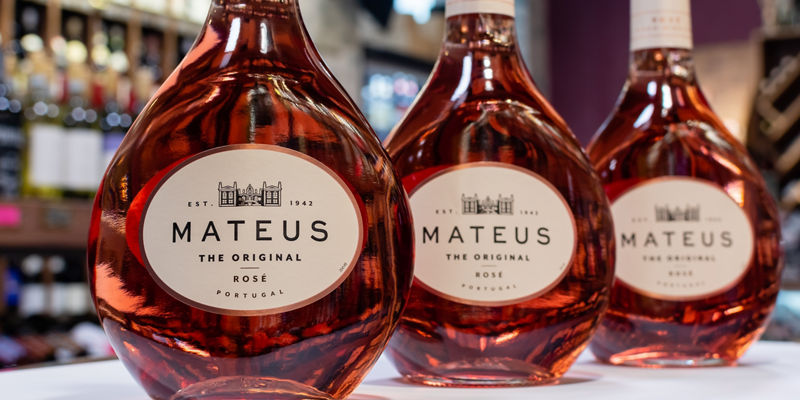
Anyone who drank wine in the 1960s, ’70s or ‘80s probably enjoyed at least a glass or two of one of Portugal’s easy-drinking exports, Mateus Rosé. Created in 1942 during the height of World War II, Mateus founder Fernanco van Zeller Guedes combined Portuguese vinho verde grapes with French wine-making techniques to produce a rosé that was slightly bubbly, delicately sweet and pinkish in hue.
This popular wine was originally crafted to suit Brazilian tastes, as exports to Europe were disrupted by German U-boats in the Atlantic. The sparkling nature provided crossover appeal that captured beer and soda drinkers as well as wine enthusiasts. By the late 1980s, bolstered by the introduction of a white wine version, Mateus accounted for over 40 percent of Portugal’s table wine exports and achieved global sales of more than three million cases per year.
One of the hallmarks of Mateus, and undoubtedly a major contributor to its worldwide success, is its depiction of an opulent estate entitled “Palacio de Mateus” on its label. In truth, the building in question, which is located in Vila Real, has never played a material role in the wine’s production and is not technically a palace. According to Portuguese law, a building may be deemed a “palace” only if a member of the sovereignty has spent at least one night on its premises. The house was built during the first half of the 18th century by António José Botelho Mourão, and his descendants still live there today.
To legally use the estate’s likeness on Mateus labels, Guedes offered the owners a choice: they could receive either a small royalty on every bottle sold or a lump sum paid up front. Their decision to accept the latter option is widely considered one of the greatest mistakes in the history of both business and wine. According to Oz Clarke’s The History of Wine in 100 Bottles, it is “still not a subject to be brought up in conversation.”
The Mateus brand may not be as famous now as it was in its heyday, but it has enjoyed a revival since the turn of the millennium thanks to a relaunch and a subtle adjustment to the original recipe that made it slightly drier and therefore more appealing to modern palates. Despite the flavor changes, the wine is still sold in its distinctive narrow-necked, flask-shaped bottle—inspired by the water flasks traditionally worn on the hip by Portuguese soldiers during World War I—complete with the iconic Palacio de Mateus label and a real cork stopper.
-
Museu do Douro
The Museu do Douro (Douro Museum), located in the peaceful town of Régua, provides an insightful look into Portugal’s Douro wine region. Since its founding, the museum has earned praise for its commitment to preserving the Douro’s distinctive culture and heritage. Fittingly, it occupies the former headquarters of the General Company of Agriculture and Alto Douro Vines (1756–1863), the organization that established the Douro as the world’s first demarcated wine region.
The three-story building, reminiscent of a farmhouse and designed in the Pombaline architectural style, originally served many purposes. These included administrative and judicial functions, including developing and regulating the production and marketing of the region’s wine. Here, the company’s employees and winemakers who made the trek to Régua for its annual wine fair could also find lodging. Wine was even made and stored on-site.
Today, the first floor that was used for wine storage holds the museum’s permanent collection showcasing various artifacts, wine labels and artwork. Once reserved for meetings, wine exhibitions and court proceedings, the second floor contains a wine bar and restaurant in what was formerly a wine-tasting room and kitchen, respectively.
-
Notable figures associated with Lisbon
Lisbon has long been associated with influential explorers, statesmen, writers and artists whose achievements helped shape Portugal’s history and culture. From navigators who charted new sea routes to poets, musicians and reformers, these individuals reflect Lisbon’s legacy as one of Europe’s great cultural capitals.
- Prince Henry the Navigator (1394–1460)—Although he rarely undertook voyages himself, Prince Henry the Navigator was among the principal architects of Portugal’s Age of Discovery. The royal prince sponsored expeditions along the coast of Africa, promoted advances in navigation and cartography and helped establish Portugal as Europe’s leading maritime power. His vision laid the groundwork for the global explorations that transformed the city into one of the world's most important ports and centers of commerce. He is the foremost figure on Lisbon’s renowned Monument to the Discoveries.
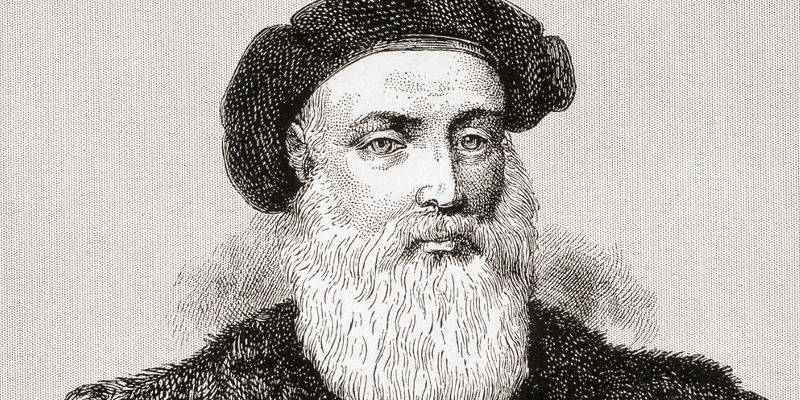
- Vasco da Gama (c. 1460s–1524)—One of history’s most celebrated explorers, Vasco da Gama achieved lasting fame when he led the first successful voyage from Europe to India via the Cape of Good Hope in 1498. Departing from Portugal and returning with valuable knowledge of a direct maritime route to Asia, his expedition ushered in a new era of global trade and cemented Portugal’s status as a major world power. Vasco da Gama's legacy remains deeply connected to Lisbon, where monuments and memorials commemorate his achievements, particularly in the historic Belém district.
- King Manuel I (1469–1521)—Known as "Manuel the Fortunate," King Manuel I presided over the golden age of Portuguese exploration and prosperity. Under his reign, Portugal’s overseas trade flourished, bringing immense wealth to Lisbon. He commissioned many of the city's most enduring landmarks, including the Jerónimos Monastery and Belém Tower. The distinctive Manueline architectural style, characterized by elaborate maritime motifs and decorative stonework, bears his name and remains one of Portugal’s most important artistic contributions.
- Luís de Camões (c. 1524–1580)—Widely regarded as Portugal’s national poet, Luís de Camões immortalized the nation’s maritime achievements in his epic poem Os Lusíadas (The Lusiads), first published in 1572. The work celebrates Vasco da Gama’s voyage to India while exploring themes of heroism, exploration and national identity. Camões is commemorated throughout Lisbon, most notably in Praça Luís de Camões, a prominent square that serves as one of the city’s cultural gathering places.
- Sebastião José de Carvalho e Melo, Marquis of Pombal (1699–1782)—One of Portugal’s most influential statesmen, the Marquis of Pombal served as prime minister between 1756 and 1777, during the reign of King José I. Following the catastrophic Lisbon earthquake of 1755, he directed one of the most ambitious urban reconstruction projects in European history. The wide avenues, orderly street grids and elegant squares of downtown Lisbon owe much to his leadership.
- Fernando Pessoa (1888–1935)—Fernando Pessoa transformed Portuguese literature through his innovative writing and creation of more than 75 literary alter egos, which he referred to as his "heteronyms.” Much of his life was spent in Lisbon, where he worked, wrote and frequented the city's cafés. His poetry and prose explored identity, philosophy and modernity, earning him international recognition and securing his place as one of Portugal’s greatest writers. For visitors to Lisbon, the two works most associated with Pessoa are The Book of Disquiet—a “factless autobiography” published posthumously in 1982—and Mensagem (1934), a collection of poems celebrating Portugal's history, heroes and maritime achievements.
- Amália Rodrigues (1920–1999)—Often called the "Queen of Fado," Amália Rodrigues elevated Portugal’s traditional musical genre to international prominence. Born in Lisbon, she became the defining voice of fado during the 20th century, captivating audiences with her expressive performances and emotional interpretations of songs centered on love and longing. Her legacy continues to be celebrated throughout Lisbon, particularly in the historic neighborhoods of Alfama, Mouraria and Bairro Alto, where fado continues to thrive today.
-
Notable figures associated with Porto
Porto has long been home to influential writers, artists and architects whose achievements have helped shape Portuguese identity. From the leaders who helped launch the Age of Discovery to internationally acclaimed creative visionaries, these individuals reflect Porto's enduring legacy of innovation, cultural achievement and global influence.
- John I of Portugal (1357–1433) & Philippa of Lancaster (1360–1415)
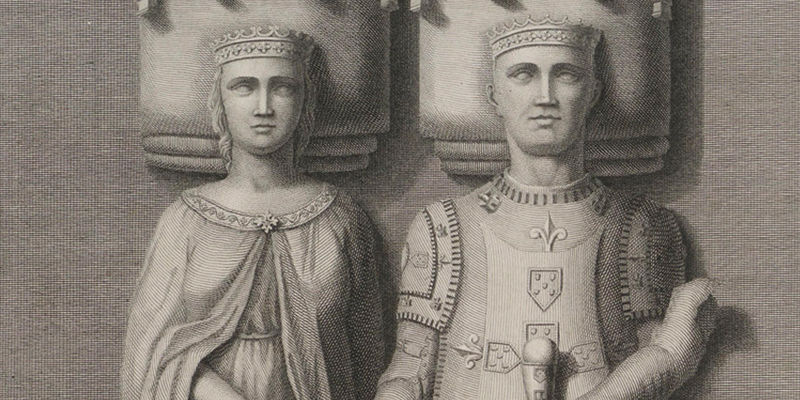
King John I of Portugal and his wife, Philippa of Lancaster are among the most significant royal figures associated with Porto. Their marriage, celebrated in Porto Cathedral in 1387, symbolized the strengthening of the Anglo-Portuguese Alliance, one of the world's oldest diplomatic partnerships, which is still in effect today. Philippa brought English courtly traditions to the Portuguese royal household, and the noble couple raised the "Illustrious Generation" of princes whose leadership helped define Portugal's golden age of exploration. - Prince Henry the Navigator (1394–1460)
Born in Porto at the Casa do Infante, Prince Henry the Navigator became one of the most influential figures of the Age of Discovery. Although he rarely undertook voyages himself, he sponsored expeditions, encouraged advances in navigation and cartography and supported the exploration of the West African coast. His efforts helped establish Portugal as a leading maritime power and opened new routes for trade and exploration. Today, visitors can explore the Casa do Infante, where the prince was born, and learn more about the city’s role in launching Portugal's era of expansion. - Camilo Castelo Branco (1825–1890)
One of the country’s greatest novelists, Camilo Castelo Branco was a prolific writer whose works helped define 19th-century Portuguese literature. Known for his passionate storytelling, vivid characters and dramatic themes, he captured the complexities of Portuguese society through more than 250 published works. His celebrated novel Amor de Perdição (1862) remains one of Portugal's literary classics. Castelo Branco's personal life was often as dramatic as his fiction, including a period of imprisonment in Porto, after he was accused of adultery with a married woman. - Manoel de Oliveira (1908–2015)
Born in Porto, Manoel de Oliveira remains one of Portugal's most acclaimed film directors. His extraordinary career spanned more than eight decades, during which he developed a distinctive artistic style that blended history, philosophy and social commentary. Many of his movies drew inspiration from Porto and featured the city's neighborhoods, architecture and riverfront landscapes. Some of his most acclaimed films include Past and Present (1971), Benilde or the Virgin Mother (1975) and Doomed Love, a 1978 adaptation of Castelo Branco’s novel Amor de Perdição. - Álvaro Siza Vieira (b. 1933)
Regarded as one of the world's foremost contemporary architects, Álvaro Siza Vieira is the leading figure of the internationally renowned School of Porto. Celebrated for his elegant, minimalist designs and sensitive integration of architecture within the surrounding landscape, Siza has received many of the profession's highest honors, including the Pritzker Architecture Prize. His work can be seen throughout Porto and beyond, most notably at the Serralves Museum of Contemporary Art.
- John I of Portugal (1357–1433) & Philippa of Lancaster (1360–1415)
-
Port wine
Port wine traces its roots to the picturesque Douro River Valley of northern Portugal, where centuries of tradition have shaped its rich character and complexity. The region had been known for wine since ancient times, but port emerged as a distinct product during the 17th century. Frequent political and military conflicts between England and France disrupted Britain's access to French wines, prompting English merchants to seek alternative suppliers. Portugal became a natural trading partner.
Transporting wine across long sea voyages, however, presented challenges. To stabilize the wine and preserve its quality, producers began adding a small amount of grape spirit during fermentation. This process halted fermentation before all the natural sugars were converted to alcohol, resulting in a fortified wine that was both stronger and sweeter than traditional table wines. The style proved immensely popular in Britain and helped launch port's international reputation.
The city of Porto, which gave this iconic fortified wine its name, played a vital role in the beverage’s success. Located near the mouth of the Douro River, Porto became the commercial center for the port wine trade. For centuries, barrels of wine were transported downriver from the vineyards of the Douro Valley to the riverside district of Vila Nova de Gaia, directly across from Porto’s historic center. There, merchants aged, blended and stored the wines before shipping them to markets around the world.
Today, visitors to Porto can still see the famous wine lodges that line the waterfront. Many of the most renowned port houses, including Taylor’s, Graham’s and Sandeman, offer tours and tastings that introduce guests to the traditions behind the wine.
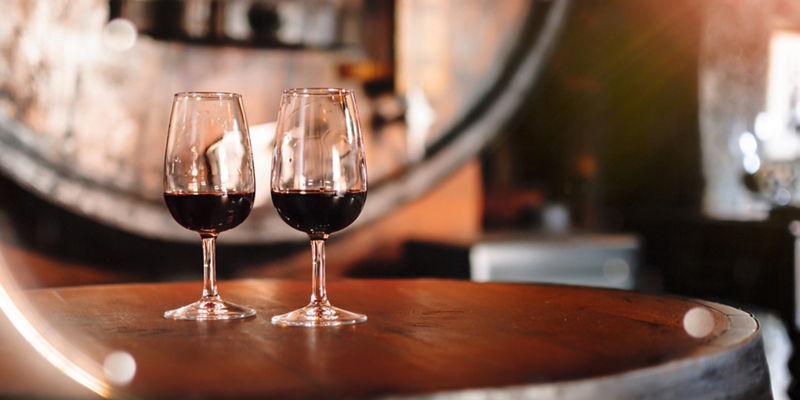
Port wine comes in several distinctive styles. Ruby port is youthful and fruit-forward, known for its deep color and vibrant berry flavors. Tawny port is aged longer in wooden casks, developing notes of caramel, nuts and dried fruit. Vintage port, considered the pinnacle of quality, is produced only in exceptional years and has the ability to age gracefully for decades. Other styles, including white port and rosé port, offer lighter and more contemporary expressions of this classic wine, and they pair well with local seafood dishes.
Port wine remains a symbol of Portuguese craftsmanship and hospitality, and each glass tells a story of exploration, trade and tradition. Its enduring appeal continues to connect modern wine lovers with one of Portugal’s most treasured cultural legacies.
-
Portugal’s Douro River
One of the major rivers of the Iberian Peninsula, the Douro gets its name from the ancient Celtic tribal word for water. It runs about 560 miles from its source in north-central Spain through Portugal, to its outlet at Porto on the Atlantic Ocean. The Douro is wild and meandering; only certain sections of it are navigable by small river vessels.
The picturesque Douro River Valley
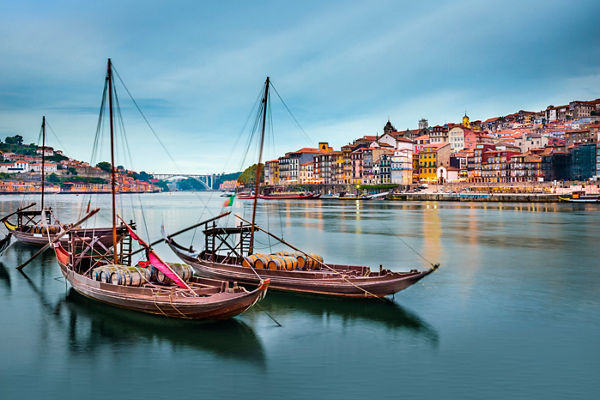
Beautiful and unspoiled, the Douro River Valley is a productive microclimate for olives, almonds and grapes. Scenery along the river is picturesque, from terraced vineyards to quaint towns to traditional rabelo sailing boats carrying casks of port wine. The area around Pinhão is considered to be the cradle of port wine, with wine-producing quintas (farms) dotting the banks along the river.
Fauna, freshwater fish and electricity
The Douro River Valley’s hilly landscape and dry, warm climate are not only excellent for viticulture, but also for fauna that are unique to the area. The river itself is home to a wide variety of freshwater fish. The Douro is quite narrow in parts, and fluctuating water levels have historically limited river travel. But now there are five dams on the Portuguese section of the river, which not only help stabilize water levels, but also produce hydroelectric power. The dams have made it possible for river cruises through the Douro River Valley.
-
Portuguese cork
The next time you hear the satisfying pop of a cork leaving a bottle, remember that it was probably made in Portugal. Nearly half of the world’s cork production hails from this bountiful country, and cork alone accounts for a substantial share of Portugal’s total foreign income derived from trade. Its three primary consumer markets are the US, the UK and Germany, which together absorb about 70 percent of the total.
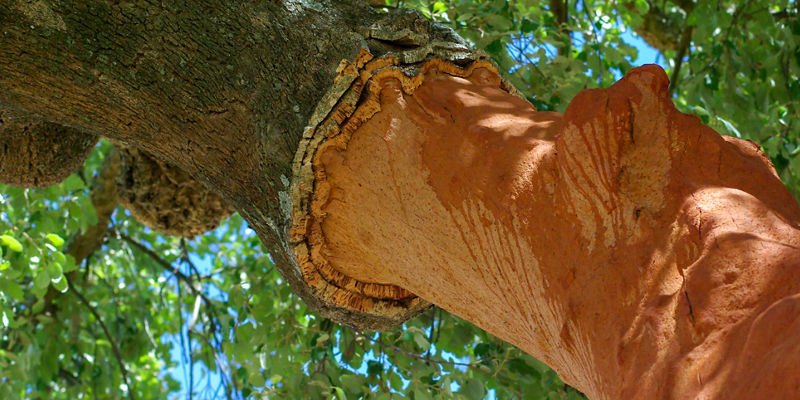
This remarkable material originates from the cork oak tree, which has developed its signature thick layer of bark over time as an adaptation to southwestern Europe’s long history of drought, bush fires and temperature fluctuations. This tree covers a significant portion of Portugal’s landscape and makes up more than a quarter of its forests. Cork is astonishingly lightweight, with 50 percent of its volume consisting of pure air. It is the only readily available solid on Earth that, when compressed on one side, does not increase in volume on the other. It is also elastic, waterproof, fire-retardant and abrasion resistant. However, its most noteworthy property is its renewability.
It takes about 25 years for a cork oak tree to be ready for harvesting. After that, the bark can be collected again every nine years. This is due to the fact that cork naturally regenerates, so one tree can produce a lifetime of harvests. Since some trees live up to 150 years, it is little wonder that cork plays such a vital role in Portugal’s economy.
Cork harvesting is a highly specialized craft. Two cork strippers work in tandem, carefully chopping and peeling the bark from the tree’s trunk. The process remains entirely manual, relying on a steel axe that harvesters use to measure the bark’s thickness, listening for the sound it produces. Due to the skill and precision involved, cork harvesting is the highest-earning sector of Portugal’s agricultural industry.
From fishing boats to floor tiles, durable cork has served many purposes over the centuries, even providing ship-building materials for the vessels used by Portuguese explorers during the Age of Discovery. Nevertheless, it was an Englishman, Robert Hooke, who discovered that cork provides the perfect seal for wine bottles—surely an idea worthy of a toast.
Douro Highlights
Cruise through the Douro River Valley, the world’s oldest demarcated wine region, and immerse yourself in Portugal’s stunning landscapes and rich cultural traditions. Here are some highlights you may experience as you sail along the “River of Gold”:
- Explore Porto’s UNESCO-listed city center
- Listen to the soulful melodies of fado music
- Visit Coimbra, Portugal's oldest university town
- Tour the 14th-century Santa Maria da Vitoria Monastery
- Sample award-winning port wines
- Discover the extraordinary Mateus Palace
- See traditional Portuguese tiles in charming Pinhão
- Journey through the stunning Alto Douro Wine Region
- Walk the winding lanes of charming Marialva
- Wander through Castelo Rodrigo, a 16th-century village
Destination Insight Videos

Portugal’s Wine Country (3:06)
In 1756, Portugal’s Douro River Valley became the world’s first protected wine-producing region, and today is a UNESCO World Heritage Site. Learn more about the region’s famous port wine.

History of Port Wines (3:58)
Take a journey with Karine as she explores Portugal’s history of wine and gains insight into its production and the various types of port, with a local expert on hand.


Douro Travel FAQ
All-Inclusive Itineraries—Douro
Choose one of our enriching, all-inclusive voyages and discover the many benefits of exploring in Viking comfort.