
1. Rivers
  2. Oceans
  3. Expeditions
  1. Complimentary Brochures
Call Viking at 138 747 or Contact Your Travel Advisor
Viking Viking Viking
Please fill out this field
Menu
  1. Oceans
  2. Expeditions
Please fill out this field
Use enter or spacebar key to select the link
Use enter or spacebar key to expand or collapse the menu
    • Find A Cruise
    • Special Offers
    • Regions

      Europe

      • Austria
      • France
      • Germany
      • Hungary
      • Portugal
      • The Netherlands
      • Switzerland
      • Other Destinations

      Africa & Middle East

      • Egypt

      Asia

      • India
      • Vietnam

      North America

      • United States
    • Waterways
      • Rhine
      • Danube
      • Elbe
      • Seine
      • Rhone
      • Garonne
      • Douro
      • Mississippi
      • Nile
      • Mekong
      • Brahmaputra
    • Seasonal & Combination
      • Christmas Markets
      • Tulip Season
      • River + Ocean Combinations
    • Other Cruise Types
      • Expeditions
      • Oceans
    • Fleet Overview
    • 360° Ship Tours
    • Viking Europe Ships
      • Viking Longships - Rhine, Main, Danube
      • Viking Longships - Douro
      • Viking Longships - Elbe
      • Viking Longships - Seine
    • Viking Egypt Ships
      • Viking Amun
      • Viking Anubis
      • Viking Aton
      • Viking Geb
      • Viking Hathor
      • Viking Osiris
      • Viking Ptah
      • Viking Ra
      • Viking Sekhmet
      • Viking Sobek
      • Viking Thoth
      • MS Antares
    • Viking Mississippi Ships
      • Viking Mississippi
    • Viking Asia Ships
      • Viking Brahmaputra
      • Viking Saigon
      • Viking Tonle
    • The Viking Difference
    • Cultural Partners
    • Awards
    • My Viking Story
    • Community
    • News
    • Complimentary Brochures
    • One Viking
    • My Viking Journey
    • Health & Safety Program
    • Viking Air
    • Updates on Current Sailings
    • Travel Information
    • Frequently Asked Questions

    • Silver Spirits Beverage Package
    • Why Viking
    • Cruise Itineraries
    • Destination Insights
    • Ships
    • All
Please fill out this field
Vibrant Spring Garden with Flower Beds

Experience the wonder of tulip season

With mild weather and colorful flowers in bloom, spring is an ideal time for curious travelers to explore the Low Countries. Read on to discover a crispy Dutch snack, delve into the storied past of Antwerp and learn about the captivating history of WWII’s Operation Garden Market.
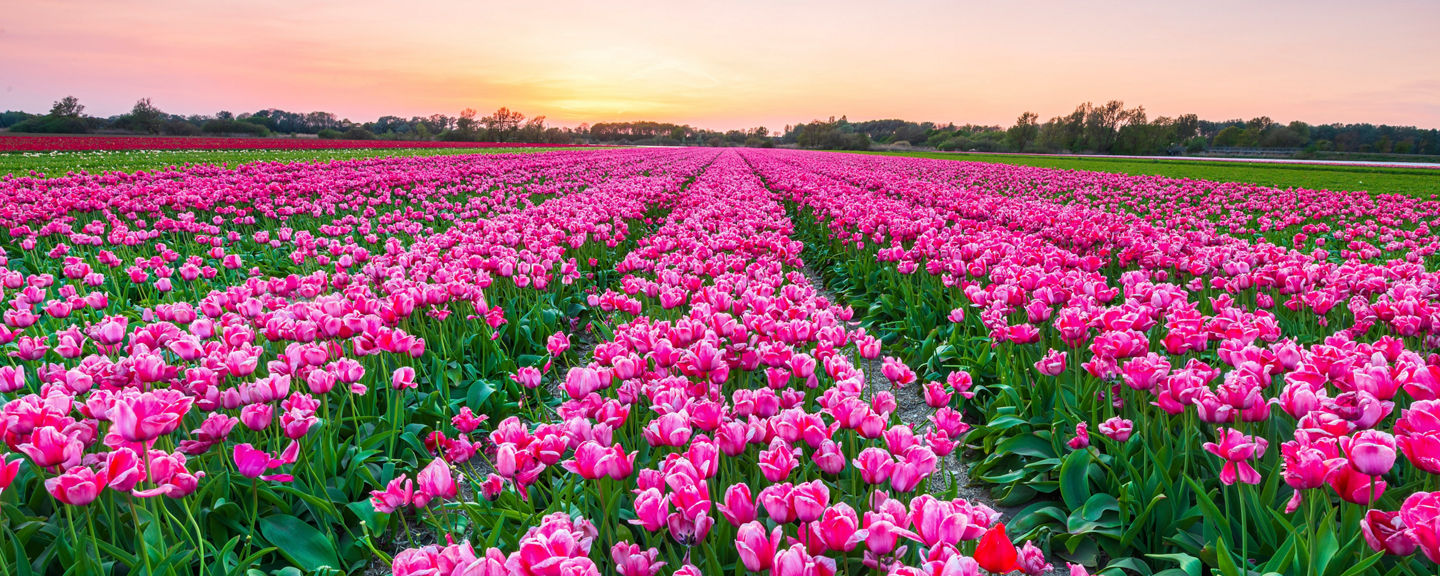
Vibrant pink tulip field at sunrise

Tulip Season

Tulips originated in Central Asia and are believed to have been cultivated for more than 1,000 years. The English word “tulip” is derived from the Persian word delband, which means “turban,” a nod to the flower’s distinctive shape.

The tulip was introduced to Europeans in 1554, when the Ottoman Empire gifted seeds and bulbs to a European ambassador. In turn, the ambassador gave them to Roman emperor Ferdinand and his royal botanist, Carolus Clusius. The botanist’s careful study of tulip cultivation laid the foundation for the modern bulb industry. One of Clusius’s contemporaries described him as the “father of all the beautiful gardens in Europe.”

Sometime after their introduction to the Netherlands, tulips contracted a non-fatal virus that created splashes of color along their petals in a wide variety of unpredictable patterns—contributing to both their appeal and their market value.

Despite their Central Asian roots, the climate of the Netherlands is ideal for tulip cultivation. Best grown in maritime regions, tulips thrive in the sandy-clay soils near the coast of the North Sea. Springtime precipitation levels (2.5"–3.5" per month) ensure that the flowers receive plenty of water, while mild winters—averaging 35-40°F (2-4°C)—offer the cool temperatures bulbs require without being too harsh.

During the 1600s, tulips famously disrupted the Dutch economy. The waxy flower became so wildly popular that they sparked a speculative trading frenzy known as “tulip mania.” At the peak of tulip mania, some individual bulbs sold for more than ten times the annual income of a skilled craftsman, and a valuable bulb could change hands up to ten times a day. One Viceroy tulip bulb was worth all the following:

  • Two sheaves of wheat
  • Four sheaves of rye
  • Four fat oxen
  • Eight fat swine
  • Twelve fat sheep
  • Two hogsheads of wine
  • Four casks of beer
  • Two tons of butter
  • A complete bed (with mattress and bedding)
  • A suit of clothes
  • A silver drinking cup

Tulip mania was short-lived, however. When it crashed, so did the fortunes of many tulip investors, creating what economists today consider to be the first speculative bubble.

While tulips may not be quite so economically valuable today, they continue to bring joy and inspiration. Anyone who appreciates the beauties of colorful flora will especially enjoy a visit to Keukenhof Gardens, the world’s largest floral garden. Located in Amsterdam, the 79-acre landscape showcases 7 million bulbs’ worth of radiant beauty.

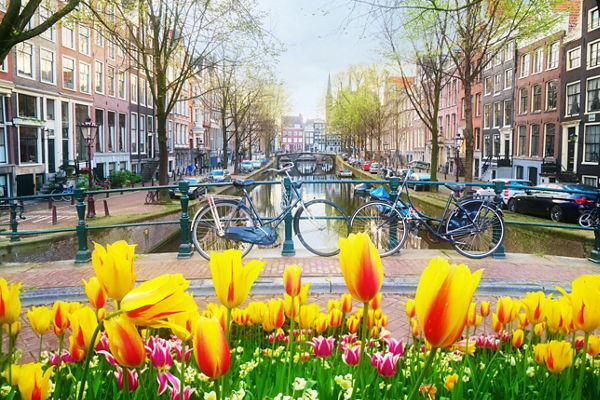
Scenic Amsterdam canal with bicycles
  • Homemade crispy fried potato croquettes

    Cuisine—Bitterballen

    In the Netherlands, meeting friends at a pub or café often involves enjoying a few drinks alongside a platter of bittergarnituur—a snack assortment that literally translates to “garnish for bitters.” The “bitters” referred to here are bittertje, specifically small glasses of Dutch Jenever or gin, though the word can refer to alcoholic beverages in general. Your bittergarnituur will likely include small cubes of Gouda or Edam cheese, some smoked sausage, salami or gherkins. But the brightest star of this culinary constellation will undoubtedly be the bitterballen—crispy, deep-fried meatballs that are a beloved bar food staple.

    Bitterballen are traditionally made from ground beef, but veal and chicken may also be used. The meat is sautéed with onions, parsley and sometimes, finely chopped vegetables like carrots. Then it is seasoned with salt, pepper, nutmeg and occasionally curry. This meat mixture gets thickened with a roux, and stock is added to create a savory gravy. The entire mixture is cooled in the refrigerator for several hours or overnight. Once the mixture congeals, it is scooped into little balls, rolled in bread crumbs and deep-fried till golden brown. They’re typically served with a ramekin of spicy mustard for dipping.

    In the first half of the 20th century, making bitterballen at home was an excellent way to transform leftover meat into something tasty and economical. Today, they are mainly served outside the home as a snack with a side of fries, or as part of the bittergarnituur plate. If you are in a hurry and do not have time to linger at a pub, you can often get your bitterballen fix by ducking into a raampje, an automat-style snack bar where food is selected from a wall of tiny glass compartments. Bitterballen are also popular at street carts and food trucks, especially at outdoor markets and festivals.

    Though humble in origin, bitterballen have transcended their status as simple bar bites. Enhanced with chorizo, goat cheese, exotic spices, mushrooms or even truffles, they now appear at upscale establishments and receptions as gourmet finger food. Wherever you find your bitterballen, they are best enjoyed piping hot with a chilled glass of Dutch pale lager or witbier.

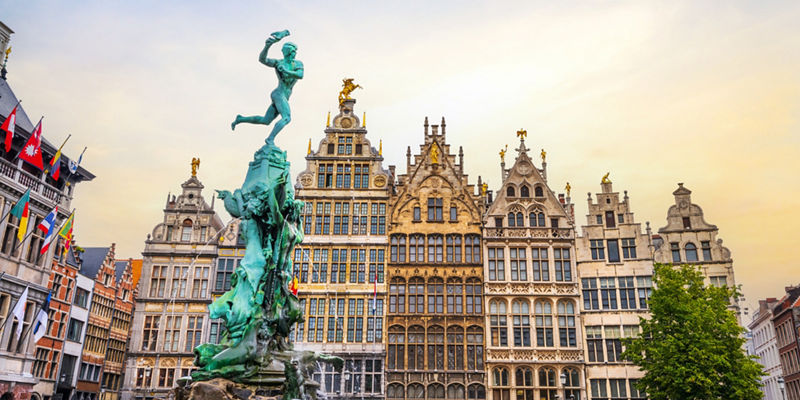
  • Historic Antwerp square with Brabo Fountain

    Culture—Antwerp, the unofficial capital of Flanders

    Flanders is a county, a region and a language area in northern Belgium. It has played a prominent role in European history since the Middle Ages, when it was among the wealthiest and most urbanized areas of the continent. Today, the official capital of Flanders is Brussels, which also serves as the capital of Belgium. But the unofficial capital of Flanders is Antwerp, widely regarded as the heart and soul of Flemish (Dutch-speaking) culture.

    Located just 55 miles from the North Sea on the Scheldt River, Antwerp had already become a major port and trading center by the 13th century. During the 14th century, as Bruges’s tidal inlet began to silt up, Antwerp’s fortunes rose. The city became the region’s preeminent mercantile center, growing rich from the wool trade, banking and the sugar trade. The first diamond was cut here in 1476, and even today, Antwerp is known as the “Diamond Capital of the World.”

    Flemish arts and culture also thrived. Antwerp’s painting school produced Flemish masters such as Peter Paul Rubens and Anthony van Dyke. Printing emerged as a key industry, and wealthy citizens spurred a flourishing of fine architecture. As foreign interests were drawn to the city, a cosmopolitan population developed and humanism thrived.

    During the Protestant Reformation, Dutch-speaking Antwerp became a center of Protestant activity. This, along with other political and economic factors, prompted war with King Philip II of Spain, who was also the sovereign of the Hapsburg Netherlands. This was the beginning of the so-called Eighty Years War (1566–1648). In 1576, Antwerp was sacked, and some 7,000 citizens were killed in a massacre known as “The Spanish Fury.” Still, the city continued to be a center of the Dutch revolt.

    During the Spanish occupation, many of Antwerp’s most privileged residents were called señores, from the Spanish word meaning a “decent” lord. The locals adopted the name but gave it a Flemish twist, changing it to Sinjoren. This name is still proudly used to describe anyone who was born within the Antwerp city limits. Some have an even stricter criteria, claiming that to be a true Sinjoor you must have been born in the vicinity of the old Spanish fort, between the De Leien neighborhood and the Scheldt River. Ultimately, the title is more a matter of identity than geography—an expression of the intense pride Sinjoren feel for their Flemish hometown.

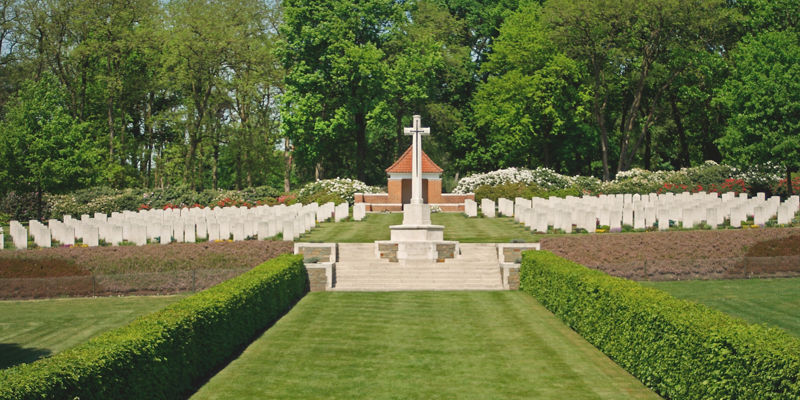
  • Serene military cemetery with central cross

    History—Operation Market Garden

    By September 1944, three months after the D-Day landings at Normandy, Allied progress in pushing Nazi troops back to Germany had slowed. The High Command recognized that the Netherlands’ vast network of Rhine River tributaries and canals presented imposing obstacles. Securing the bridges would allow the Allies to continue their advance and, hopefully, end the war by Christmas.

    One of World War II’s most dramatic undertakings, Operation Market Garden was devised to seize multiple bridges simultaneously, thereby overwhelming German forces and preventing them from securing alternate crossings. Under a two-pronged strategy, Operation Market dropped American, British and Polish paratroopers from the sky to secure sites around eight Dutch bridges. Meanwhile, Operation Garden utilized British ground forces, hoping to solidify gains bridge by bridge until the Allies had secured the last bridge in Arnhem—later immortalized in the 1977 film A Bridge Too Far.

    On September 17, over 20,000 men parachuted in, joined by more than 14,500 troops arriving via military glider. The Allies, believing the German forces to be in retreat, calculated that their 64-mile (103 km) ground advance would take just four days. Meanwhile, the Reich’s fractured infantry was regrouping near Arnhem. Though Allied intelligence and members of the Dutch resistance had reported this buildup, the commanding British General Frederick Browning still decided to move ahead.

    Ultimately, the battle-filled march to Arnhem took nine days instead of four. The Allies emerged victorious at Nijmegen’s Waal Bridge after a four-day battle, but by the time they arrived at Arnhem—the last link to crossing the Rhine—they found that their faltering comrades had lost control of the city. After their long advance, they were forced to retreat.

    The unexpected resurgence in German strength certainly contributed to the defeat, as did the insufficient reach of the troops’ portable radio transmissions. Furthermore, the delivery of troops and supplies was delayed by poor weather and an aircraft shortage, undermining the Allied plan for using the element of surprise. By the time the Allies had declared victory in Nijmegen, the tide in Arnhem had already turned in favor of the Nazis.

    Though history largely remembers Operation Market Garden as a failure, it paved the way for the capture and destruction of the Ludendorff Bridge at Remagen, built during World War I to defend the Rhineland. Its loss dealt a major blow to German morale.

    Today, visitors to Arnhem can ride through the fields where paratroopers landed, explore the Airborne Museum to learn about the fateful events of 1944 and witness a reenactment of the Battle of Arnhem. You can also pay homage to the Allied soldiers, as well as Dutch civilians, buried at the Airborne Cemetery at Oosterbeek.

Tulip Season Highlights

The Netherlands and Belgium are renowned for their rich history, artistic treasures and engineering marvels. When you visit in the springtime, you can experience the added joy of seeing lands awash in vibrant color. Here are some of the remarkable sights and activities you may experience on a tulip season journey:

  • Explore Keukenhof Gardens, the world’s largest floral park
  • See works by the Dutch Masters at Amsterdam’s Rijksmuseum
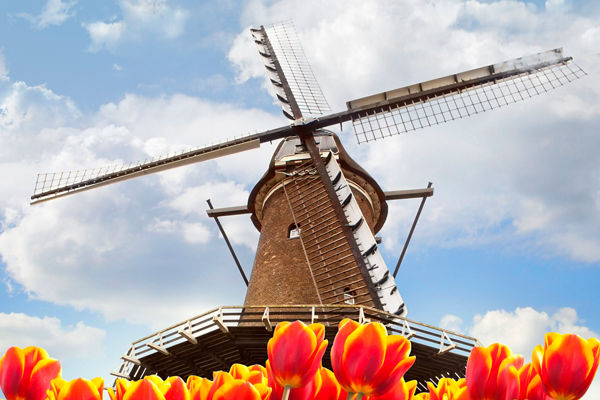
  • Learn about the iconic 18th-century windmills of Kinderdijk
  • Visit a tulip farm in the charming village of Slootdorp
  • Cycle through the picturesque countryside near Enkhuizen
  • Peruse van Gogh’s masterpieces at the Kröller-Müller Museum
  • Take in the opulent interiors and gardens of Paleis Het Loo
  • Sample a warm, delicious Belgian waffle in Antwerp
  • Browse shops in the Royal Gallery of St. Hubert in Brussels
  • Discover Bruges’s medieval city center, a UNESCO Site

Destination Insight Videos

  • Exploring Holland - Amsterdam to Kinderdijk (30:48)

    Long-time Viking family member and renowned British photographer Alastair Miller begins his journey in Amsterdam, where he reveals the cultural treasures of the Netherlands’s historic capital. Join Alastair as he peruses unique shops (Posthumuswinkel) and a colorful flower market, pedals through the city and visits the owner of a houseboat museum. After stepping on board Viking Kara, one of our award-winning Viking Longships, he sails to Kinderdijk to meet with locals who care for the iconic windmills.

  • Get a glimpse into Amsterdam’s past with guest lecturer Sherry Hutt, PhD (59:03)

    Discover the fascinating history of an iconic European city with guest lecturer Sherry Hutt, PhD, who presents “Amsterdam—Eight Centuries Along the Canals.” Founded as a small medieval settlement on the shores of the Amstel River in the Netherlands, Amsterdam later flourished as a center for finance and trade, reaching extraordinary artistic heights during the 17th-century Dutch Golden Age. Discover the origins behind many of the things that Amsterdam—and the Netherlands—is famous for, including tulips and chocolate, as Dr. Hutt shares insights into this canal-laced city.

  • Stroll through the World Famous Keukenhof Gardens in the Netherlands (10:44)

    Join us as we journey to Keukenhof Gardens in the Netherlands, considered to be one of the world’s most beautiful spring gardens. During an aerial drone tour, enjoy a bird’s-eye view of its many colorful flower beds filled with tulips, daffodils, hyacinths and many more stunning blossoms—both common and rare. Wander through this magnificent garden when you embark on our 10-day Tulips & Windmills voyage.

  • "Tulip Mania: The Bulb that Sprouted the First Stock Market Bubble" with Russell Lee (59:38)

    Learn how tulips created an economic bubble in the 1600s and explore the fascinating story behind the eventual bursting—and financial collapse that followed—throughout the Netherlands and beyond. Once more, we are joined by award-winning writer and lecturer Russell Lee, a master storyteller with a unique, easy-to-understand approach. In this episode, Russell explains the phenomena known as “tulip mania,” and the world-renowned artwork that was created during the Dutch Golden Age.

Tulip Season Travel FAQ

From mid-March to mid-May, the Low Countries (Belgium, Luxembourg and the Netherlands) abound with glorious, vibrant flowers. Early in the season, flowers like hyacinths, daffodils and tulips begin to bloom, with peak tulip season occurring in April. Amsterdam’s stunning Keukenhof Gardens, which feature an astounding 7 million blooms, are only open during this spring season, from mid-March to mid-May.

One of the key benefits of traveling during tulip season is being able to learn about the Netherlands’ booming floral trade and having the chance to view fields awash with glorious color. Given the temperate weather, many outdoor gardens, sculpture parks and public parks are also open. There are additional benefits to traveling to the Low Countries during the spring. With fewer crowds than the more popular summer season, travelers have more opportunities to explore at a leisurely pace and immerse themselves in the sights, sounds and flavors of this enchanting region.

Spring is an ideal time for travelers to participate in outdoor activities. You may wish to ride an e-bike through the polders, or low-lying lands, along the Lek River. Here you can explore Kinderdijk’s UNESCO-listed, 18th-century windmills. Or, you can participate in a cheese-making workshop after touring a family-run farm in Middenbeemster. It is also a wonderful season for walking tours or scenic boat rides along some of the region’s many canals. In case of a rainy day, there are still many enriching indoor activities for visitors to engage in. The Netherlands is home to many impressive art museums, including Amsterdam’s renowned Rijksmuseum and Otterlo’s Kröller-Müller Museum, which houses an extensive collection of van Gogh’s masterpieces.

Both the Netherlands and Belgium take great pride in their distilled malted spirit known as genever. In terms of flavor profile and usage, genever falls somewhere between whiskey and gin. The name genever comes from the Latin word for juniper berry. The spirit is a triple distillate (corn, barley and rye) combined with a second juniper-infused distillate, similar to gin. Genever may be further distilled with botanicals or spices (citrus peels, caraway seeds, cardamom or anise) before it is aged in a copper pot or oak barrel. Cheese-making is a culinary point of pride in the Netherlands. One of the most popular varieties is gouda, a semi-hard cheese with 48 percent milk-fat content and a mild-to-piquant taste. Edam is another important Dutch cheese. It is a semi-hard cheese with a fat content of 40 percent and a mellow, salty taste. Maasdam cheese, another staple, features large holes and a sweet, nutty taste. In Belgium, you are never far away from one of the country’s 2,000 chocolate shops. You can identify authentic Belgian chocolate by checking for a smooth, silky texture and a balanced flavor profile.

There are three official languages—Flemish (Dutch), French and German. Flemish is the predominant language in northern Flanders, which encompasses Antwerp, Bruges and Ghent. In southern Wallonia, French is the main language. Both French and Flemish are the official languages of Brussels and the surrounding 19 municipalities that make up the Capital Region. A small German-speaking community resides in the eastern province of Liège. English is widely spoken, especially in major cities and among younger people, who begin learning it in school around age 14. Visitors who speak English should have little trouble making themselves understood.

All-Inclusive Itineraries—Tulip Season

Choose one of our enriching, all-inclusive voyages and discover the many benefits of exploring in Viking comfort.
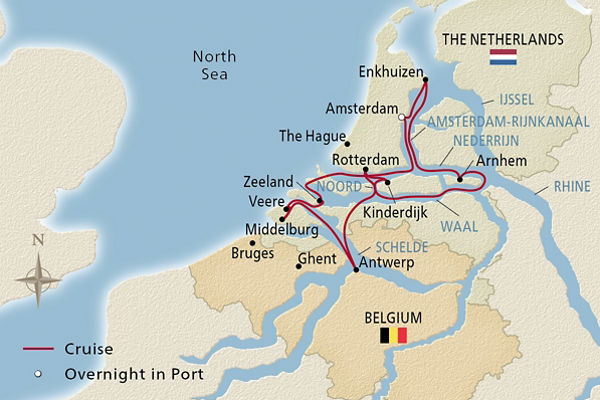
Hide map Show map

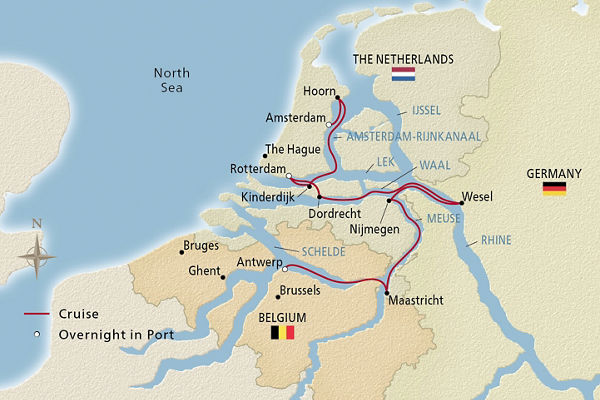
Holland & Belgium

Amsterdam to Antwerp
FLY FREE UP TO AU$5,000 PER COUPLE ON 2026-2028 VOYAGES | SAVE UP TO 30% ON SELECTED 2025 VOYAGES*

10 days
8 tours
3 countries
AU$7,695 from
  • Learn More
  • Request a Quote
Hide map Show map

Tulips & Windmills

Roundtrip Amsterdam, The Netherlands
FLY FREE UP TO AU$5,000 PER COUPLE ON 2026-2028 VOYAGES | SAVE UP TO 30% ON SELECTED 2025 VOYAGES*

10 days
8 tours
2 countries
AU$5,395 from
  • Learn More
  • Request a Quote
View Cruises

Sign up to receive updates from Viking

Stay current with special offers, news and destination-focused content.

SIGN UP
Call a Viking Expert, or see your Travel Agent
Call a Viking Expert, or see your Travel Agent 138 747
138 747
TAP TO CALL
Viking Cruises Viking

Footnote

*Prices are per person, in Australian dollars and for Australian and New Zealand residents only. They are based on double occupancy, subject to availability and correct at time of publication. Prices include all advertised discounts. All offers are subject to availability and valid only for new bookings only on selected departures made between 02 September - 01 December 2025  at 5PM AEDT unless sold out prior. Viking reserves the right to correct errors or omissions and to change any and all fares, fees and surcharges at any time. View the Passenger Ticket Contract for full booking terms and conditions.
  • Company Information

    • Contact Us
    • Speak with a Viking Agent
    • Order a Brochure
    • Special Offers
    • Travel Advisors
    • FAQ
    • Media Center
    • About Us
    • Investor Relations
    • Careers
    • Site Map
    • Health & Safety Program
    • Legal
    • Privacy Policy
    • Cookie Policy
  • Viking River Cruises

    • Europe
    • Asia
    • Egypt
    • Mississippi
  • Viking Ocean Cruises

    • Scandinavia
    • British Isles & Ireland
    • North America
    • Caribbean & Central America
    • South America
    • Mediterranean
    • Quiet Season Mediterranean
    • Asia
    • Australia & New Zealand
    • World Cruises
    • Grand Journeys
  • Viking Expeditions

    • Antarctica
    • The Arctic
    • Great Lakes
    • North America
    • South America
    • Grand Journeys
    • Longitudinal World Cruises

© Viking Cruises, 2025. All Rights Reserved.

Footnote

*Prices are per person, in Australian dollars and for Australian and New Zealand residents only. They are based on double occupancy, subject to availability and correct at time of publication. Prices include all advertised discounts. All offers are subject to availability and valid only for new bookings only on selected departures made between 02 September - 01 December 2025  at 5PM AEDT unless sold out prior. Viking reserves the right to correct errors or omissions and to change any and all fares, fees and surcharges at any time. View the Passenger Ticket Contract for full booking terms and conditions.

Company Information

  • Contact Us
  • Speak with a Viking Agent
  • Order a Brochure
  • Special Offers
  • Travel Advisors
  • FAQ
  • Media Center
  • About Us
  • Investor Relations
  • Careers
  • Site Map
  • Health & Safety Program
  • Legal
  • Privacy Policy
  • Cookie Policy

Viking River Cruises

  • Europe
  • Asia
  • Egypt
  • Mississippi

Viking Ocean Cruises

  • Scandinavia
  • British Isles & Ireland
  • North America
  • Caribbean & Central America
  • South America
  • Mediterranean
  • Quiet Season Mediterranean
  • Asia
  • Australia & New Zealand
  • World Cruises
  • Grand Journeys

Viking Expeditions

  • Antarctica
  • The Arctic
  • Great Lakes
  • North America
  • South America
  • Grand Journeys
  • Longitudinal World Cruises

Call a Viking Expert, or see your Travel Agent Call a Viking Expert, or see your Travel Agent 138 747 138 747 Viking Cruises Viking
© Viking Cruises, 2025. All Rights Reserved.

RIVER OFFERS TERMS & CONDITIONS

TERMS & CONDITIONS APPLICABLE FOR BOOKINGS MADE BETWEEN 02 SEPTEMBER – 01 DECEMBER 2025 AT 7PM (AEDT) ON ALL RIVER SAILINGS (2025-2028)

  • Prices are per person, in Australian dollars and for Australian and New Zealand residents only. They are based on double occupancy and correct at time of printing. Prices include all advertised discounts, and all offers are subject to availability and may be withdrawn at any time. All offers are only valid for new bookings and only on selected departures made between 02 September - 01 December 2025 at 7PM (AEDT) unless sold out prior.
  • A partially refundable deposit of AU$1,000 per person (in the form of a future cruise voucher less an AU$100 cancellation fee) is required to secure a confirmed reservation within 3 days of booking otherwise reservation may automatically cancel.
  • Once deposit payment has been made, standard cancellation penalties apply. When booking airfares through Viking (including when taking advantage of a special offer that includes air travel), standard airline cancellation fees also apply.
  • Displayed prices indicate the lowest available pricing across all available sailings from 2025 to 2028 and may have different offers applicable from those advertised for the promoted sailing years. Pricing for each itinerary can vary at short notice as availability changes and sailings close for the current season.
  • Complete terms and conditions may be found in the Passenger Ticket Contract.

Flexible Deposit Policy (01 April 2024 – 01 December 2025 at 7PM AEDT) Terms & Conditions.

  • Our flexible deposit policy applies to new reservations only made between 01 April 2024 – 01 December 2025 at 7PM AEDT and is combinable with all other Viking offers available.
  • Under our flexible deposit policy, qualified guests can cancel their booking before final payment due date and receive deposit back in the form of a future cruise voucher less a AU$100 per person cancellation fee.
  • Guests will have 24 months to select their new date and use their Future Cruise Voucher to make a new reservation on any river, ocean, or expedition cruise.
  • When booking airfares through Viking (including when taking advantage of a special offer that includes air travel), standard airline cancellation fees will also apply. In some cases, airfares will be non-refundable. In the event of cancellation, these fees will be deducted from the deposit paid, and therefore the future cruise voucher issued.
  • The future cruise voucher can be used on any new Viking cruise and will be applied at booking and must be redeemed by the expiration date prior to final payment.
  • The future cruise voucher has no cash value and will be applied as a ’Booking Discount’.
  • Once the voucher is redeemed, it cannot be re‐issued or used towards another cruise, and any unused balance of the voucher is lost and has no cash value.
  • Valid future cruise voucher is non-transferable.

APPLICABLE FOR BOOKINGS MADE BETWEEN 02 SEPTEMBER – 01 DECEMBER 2025 at 7PM AEDT ON 2026, 2027 & 2028 SAILINGS ONLY.

Fly Free Economy Flights up to the value of AU$2,500pp when booking flights with Viking.

  • Fly Free is economy flight(s) for both guests up to the value of AU$2,500 per person (pp) to/from Australia/New Zealand.
  • If the flight cost exceeds AU$2,500pp the guest will cover the difference.
  • If flights are cheaper than AU$2,500pp the unused portion of the air funds will be waived and cannot be transferred towards any other portion of the booking or any other person.
  • A guest can use the AU$2,500pp to instead upgrade to business class or premium economy (booked through Viking) with AU$2,500pp off the buisness/premium economy airfare and the difference to be covered by the guest. Upgrade flight cost difference is to be paid at the time of flight booking.
  • Any flight cost difference is to be paid at the time of flight booking.
  • Applicable if flights are booked through Viking and must be booked in conjunction with a selected 2026/2027/2028 Viking River cruise.
  • Flights are Viking’s choice of airline for selected major gateways in AU/NZ: ADL/AKL/BNE/CBR/CHC/CNS/DRW/HBA/LST/MEL/OOL/PER/SYD/WLG.
  • Guest must return their air form to Viking within 14 business days of receiving request for flights, otherwise Viking reserve the right to remove the free air promo and apply the respective in lieu of flights discount.
  • Valid on bookings made between 02 September - 01 December 2025 at 7PM (AEDT).
  • Guest may not request to change to flights included promotion post campaign end date of 01 December 2025.
  • Viking will reach out to you or your travel advisor once flights are in the date range, at this point you may nominate your preferred departure/arrival dates.
  • Both guests must be on the same airline booking (PNR) and fly together in both directions.
  • Solo guests for River can use up to AU$5,000 towards their flights. Any unused portion of the air funds will be waived and cannot be transferred towards any other portion of the booking or any other person or booking.
  • Please use code FFR25 to activate the Fly Free offer when booking online or via the Contact Centre.
  • If no code is selected when booking via online, the Fly Free offer will be applied.

Save AU$2,500pp and book flights independently.

  • Guests are eligible to get a discount of AU$2,500 per person (pp) off the cruise fare at the time of booking in lieu of the Free Economy Class flights.
  • Solo guests for River are eligible to get a discount of AU$5,000 per booking off the cruise fare in lieu of the free flights.
  • Guests book their own flights independently of Viking.
  • Valid on bookings made between 02 September - 01 December 2025 at 7PM (AEDT).
  • Guest may not request to change to flights included promotion post campaign end date of 01 December 2025.
  • Please use code CRD25 to activate the In Lieu of Flights offer when booking online or via the Contact Centre.
  • If no code is selected when booking via online, the Fly Free offer will be applied.

APPLICABLE FOR NEW BOOKINGS MADE BETWEEN 02 SEPTEMBER - 01 DECEMBER 2025 at 7PM AEDT ON 2025 RIVER SAILINGS.

CRUISE ONLY OFFER - SAVE UP TO 30% on selected Viking 2025 River Voyages

  • Applies to any new booking made between 02 September - 01 December 2025 at 7PM AEDT on a 2025 Viking River voyage.
Open a modal and sign up to receive information about our best deals.